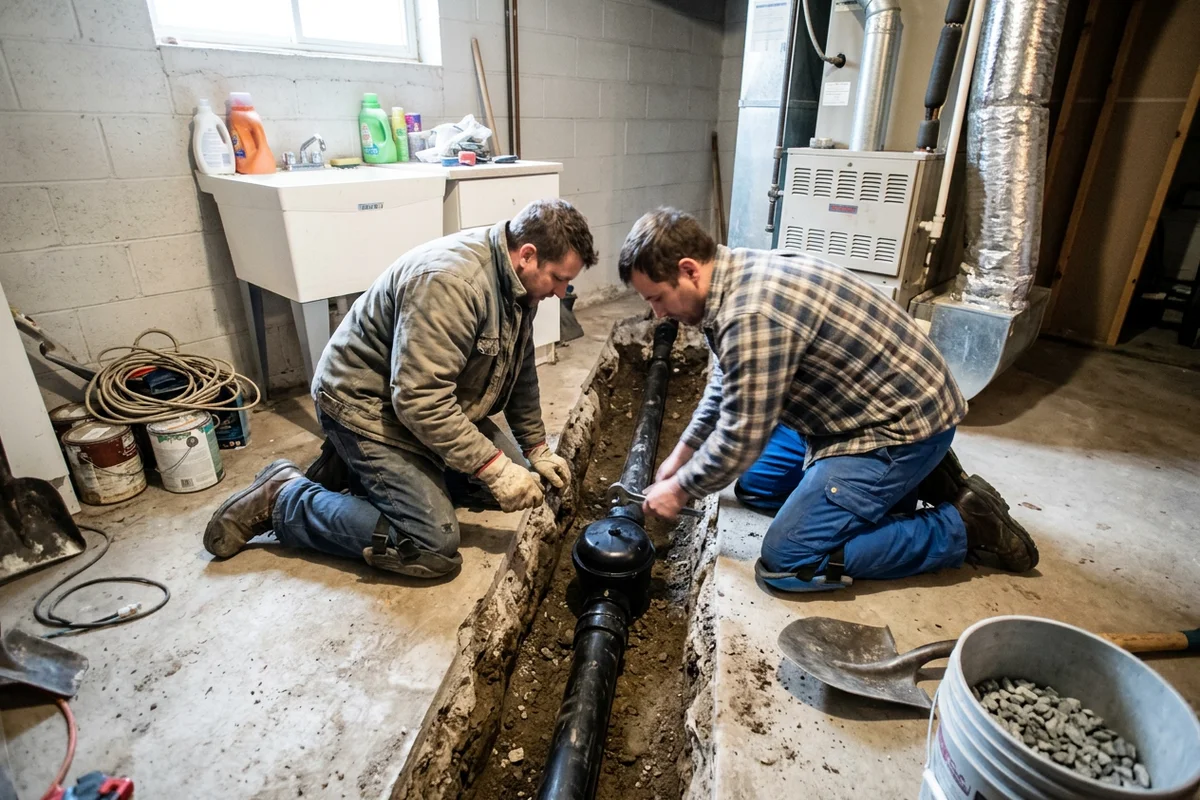
What a Backwater Valve Does
Older Toronto neighbourhoods often feature combined and surcharging sewers that push sewage back up through floor drains during heavy storms. A mainline backwater valve immediately closes when the water flow reverses. We typically install the Mainline Fullport Backwater Valve, which is considered the gold standard in the plumbing industry. This specific brand features a clear plastic cover so you can easily see inside without opening it up.
We always start by camera-inspecting the lateral drain line. The next step involves pulling the City of Toronto building permit, cutting the concrete floor, and installing a normally open valve with cleanout access. We then book the official city inspection before the new concrete goes back in place. Your subsidy eligibility is confirmed by our office staff, who also file the complex paperwork on your behalf. The final award amount is decided entirely by the city.
Inside the valve housing sits a normally open flap. During a standard day, wastewater from your house flows right out past this gate to the city sewer. When the municipal system fills up and the flow reverses, the floating devices lift the flap up to form a tight seal. This brilliant little mechanism keeps the sewage safely in the city pipe instead of spilling across your basement floor, which is the most common basement flood in Toronto we get called to after a summer storm.
Maintaining this system is actually incredibly simple. We recommend following a quick seasonal checklist:
- Open the access lid every spring and late fall.
- Wipe down the rubber O-ring seal to ensure it stays watertight.
- Run hot water and a bit of dish soap over the flap.
- Clear away any scale, grit, or grease buildup.
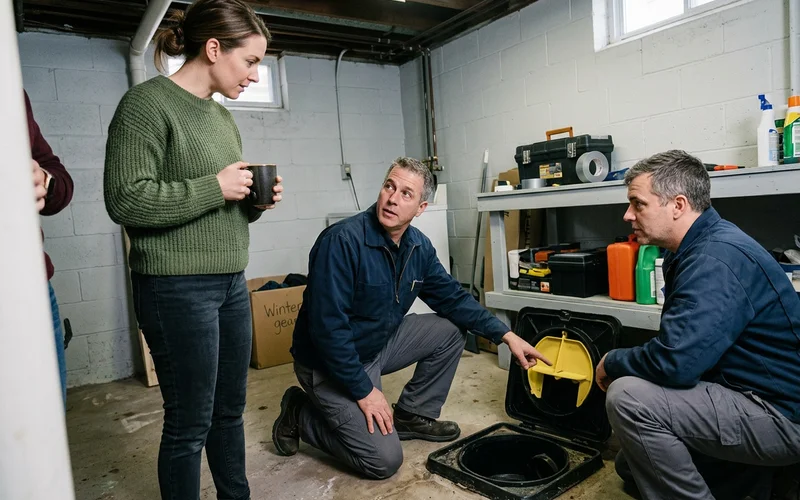
5 Reasons Toronto Homes Built Before 1970 Need a Backwater Valve
Older houses have a unique charm, but their aging plumbing systems face modern challenges. We frequently see specific vulnerabilities in homes built before 1970. The local infrastructure was simply not designed for the volume of water occurring today. Here are the five main reasons a valve upgrade is essential for older properties.
1. The Risk of Combined Sewers
Many pre-1970 neighbourhoods still rely on a single pipe carrying both stormwater and household sewage. A heavy downpour quickly fills this shared line, and municipal sewer surcharge pushes the filthy flow backward. Combined sewer overflow events are the exact moments when unprotected basements fill up with waste.
2. Floor Drains Below Street Level
The basement floor drain is often the lowest physical opening connected to your sanitary lateral. Water naturally seeks the lowest point, making this drain the very first place backflow escapes into your home. We install the valve directly on the main line to cut off this entry point entirely.
3. Tree Roots and Clay Pipes
Older Toronto homes commonly feature underground clay sewer pipes installed in short, five-foot sections. Tree roots actively seek out the moisture at these connecting joints, forcing their way inside and growing into thick, fibrous nets. These root blockages catch grease and debris, drastically increasing the chance of a severe backup during a storm.
4. Outdated Foundation and Downspout Connections
Older homes frequently have weeping tile tied directly into the sanitary line. A severe storm adds massive amounts of groundwater to an already overflowing system. The permanent fix is pipe severance and capping, perfectly paired with a sump pump installation.
Toronto’s Municipal Code Chapter 681 also requires most downspouts to be disconnected from the sewer system. Downspout disconnection dramatically reduces the sudden load on the municipal pipes during heavy rains. We always check these connections during our initial site visit.
5. History of Previous Flooding
The July 8 2013 storm and the August 2018 Rockcliffe-Smythe flooding hit older housing stock the hardest. Homes that have backed up once are incredibly likely to suffer the same fate again without a valve. We consider a previous flood a massive warning sign that your property needs immediate protection.
Why the Camera Inspection Comes First
A high-definition CCTV drain camera is fed directly through your cleanout and sent down the lateral line. The real-time video feed shows the exact pipe route, its depth, and whether the material is aging cast iron, clay, or modern plastic. We watch the monitor closely alongside you to identify hidden dangers.
Seeing the inside of the pipe reveals problems you could never diagnose from the surface. The inspection helps us spot several common issues:
- Tree root intrusions blocking the normal flow.
- Offset joints where two pipe sections have slipped apart.
- Corrosion or rust flakes inside older cast-iron lines.
- Pipe “bellies”, which are low sagging spots where heavy waste pools together.
We use this crucial footage to decide the perfect location for your new valve. Installing a backwater device on a cracked, root-filled, or sagging lateral is exactly how these protective systems fail. The pipe must be structurally sound for the mechanical flap to operate securely. We always share the complete video footage with you before proposing any work. This transparent approach ensures you understand exactly what is happening beneath your basement floor.
Backwater Valves and the Toronto Subsidy
The City of Toronto Basement Flooding Protection Subsidy Program contributes up to $1,700 CAD toward a qualifying backwater valve, and up to $3,400 per property combined with a sump pump. This generous program applies strictly to City of Toronto properties, requiring both a valid building permit and a formal city inspection. We operate as a fully registered installer for this specific program.
Municipal building inspectors will verify that the valve is a “normally open” model, which is a strict requirement for local sanitary drains. They also check that the new installation includes a permanently accessible inspection chamber at floor level. We confirm your eligibility before the concrete is ever cut, file the detailed paperwork, and book this mandatory inspection.
Here is a quick breakdown of the potential assistance available:
| Protection Upgrade | Maximum Subsidy Amount |
|---|---|
| Backwater Valve Only | Up to $1,700 CAD |
| Valve & Sump Pump Combo | Up to $3,400 CAD |
The final monetary award is decided exclusively by the city after the inspection passes, and we never guarantee the payout. Homeowners dealing with a messy backup right now should call for sewage backup cleanup first and plan to install the valve immediately after. If your property also needs foundation drain disconnection to meet code, see our complete guide on sump pump installation.
Why Homeowners Put Off a Backwater Valve Until the Second Backup
Many property owners hesitate to upgrade their plumbing until disaster strikes twice. We hear a few common objections from folks trying to delay this essential project. The truth is that putting off the installation almost always costs more in the long run.
“It only happened once, in a freak storm.”
In our professional opinion, there is no such thing as a one-off backup on a surcharging sewer. The underground pipe that carried raw sewage into your basement is still fully connected, and big storms are getting more frequent. The cleanup bill from a single flood usually costs more than the entire valve installation.
“I don’t want my basement floor dug up.”
The required trench is actually quite small and located directly on the lateral pipe, usually near the front foundation wall. We typically complete the on-site work in just one working day. The final concrete patch is finished flush with your floor and features a neat, flat access lid.
“I’ve heard valves cause other problems.”
Poorly placed or normally closed valves certainly can cause drainage issues. A normally open mainline valve, installed after a camera inspection and approved by the city inspector, is the standard, problem-free approach for Toronto homes. We strictly avoid cheap “flood checks” designed only for single floor drains, opting instead for comprehensive lateral protection.
“The subsidy paperwork looks complicated.”
The municipal application is highly detailed, which is exactly why our administrative team handles it. We file the dense paperwork and coordinate directly with the city inspectors on your behalf. You simply sign the final forms. A smooth process means you get your rebate faster.
Protecting your property with a backwater valve installation Toronto trusts is easier than you might think.
We are ready to answer your questions and schedule your initial drain inspection.
Call our team today to get the process started.
Don’t wait until the next heavy rainstorm to find out your basement is vulnerable.