Emergency Operations: 24/7 GTA Dispatch
(416) 555-0100

24/7 Rapid // 90-Minute GTA Dispatch Window

Basement Flood Toronto: Emergency Water Extraction Toronto, 24/7 Truck-Mount Dispatch for Standing Water in GTA Basements

By The Basement Flood Toronto Crew

Emergency water extraction in Toronto is the same-visit removal of standing water from a flooded basement with truck-mounted vacuums and submersible pumps, dispatched 24/7 within a 90-minute window, priced $500-$1,500 CAD for Category 1 under 500 sqft and $1,500-$4,000 CAD for Category 2 up to 1,500 sqft.

Standing water does its worst damage in the first day. It climbs drywall, soaks into underpad and starts turning from clean to grey. Our job on the first visit is to get it out fast, map where it went, and set up drying before the damage spreads.

  • 18 Years GTA Basement Flood Response
  • IICRC WRT, ASD, AMRT, CDS Certified
  • 24/7 Dispatch, 90-Minute Response
  • Insurance Direct-Billing, Subject to Policy Limits
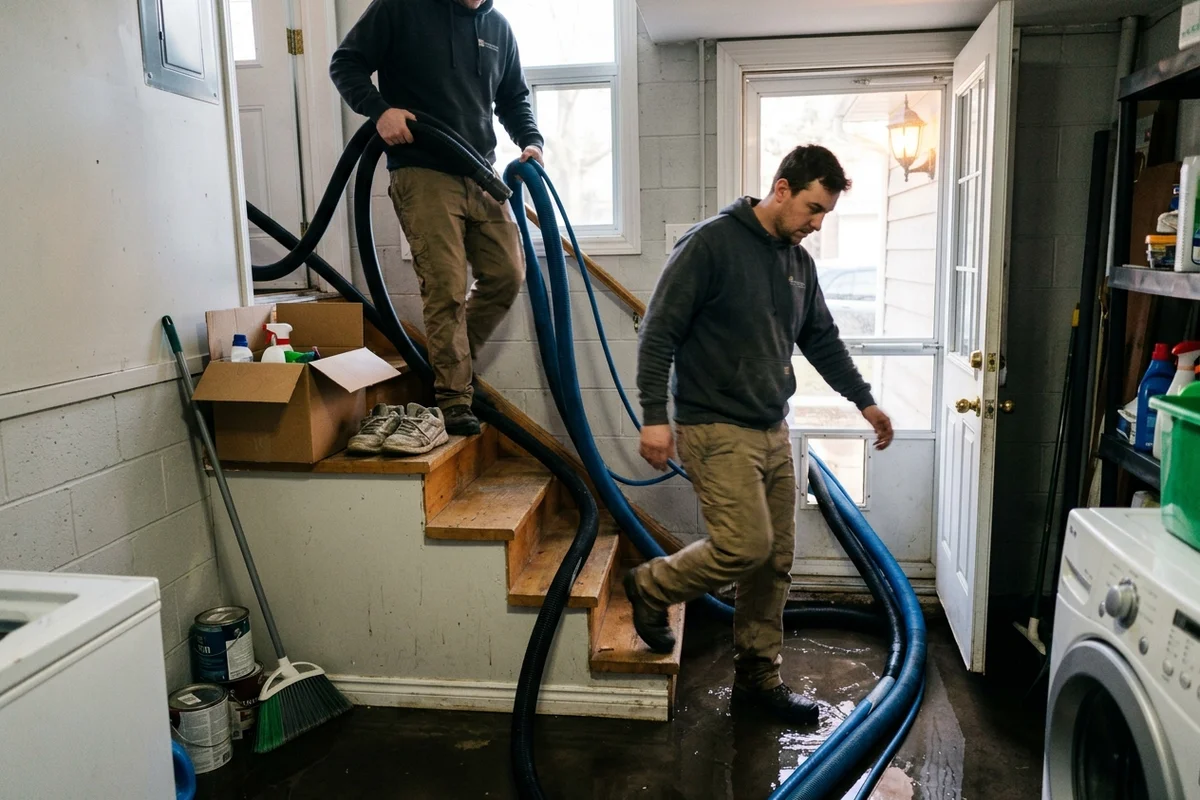
Two technicians running truck-mounted extraction hoses down basement stairs into standing water at night
Published Range // Emergency Water Extraction CAD

From

$500 CAD

per extraction

Full bands
  • 18 Years of Basement Flood Response
  • IICRC WRT, ASD, AMRT, CDS Certified
  • 24/7 Dispatch, 90-Minute Response
  • Insurance Direct-Billing
  • 5-Star Customer Satisfaction
  • WSIB + $5M Pollution Liability

Every minute counts once water is standing in a finished basement, which is why our basement flood response across Toronto runs on a 90-minute dispatch window. Our team handles the fast emergency water extraction Toronto residents call for when a pipe bursts, a sump fails or a storm overwhelms the drains.

Emergency Water Extraction Toronto: Why Speed Matters

Water never just sits still on your floor. Every hour water sits, it wicks higher into drywall and degrades from clean to grey. Wicking is the way drywall draws water upward like a paper towel, often 12 inches or more above the visible waterline within a day. Moisture easily travels behind baseboards and up into wall cavities where you cannot see it.

We follow the IICRC S500 standard, which dictates how professionals handle water damage restoration safely. Under this standard, clean water left sitting for roughly 48 hours is treated as grey water, and that changes what can be saved. Clean water quickly picks up contaminants from the floor, the carpet and the soil, which is called Category 1 to Category 2 degradation.

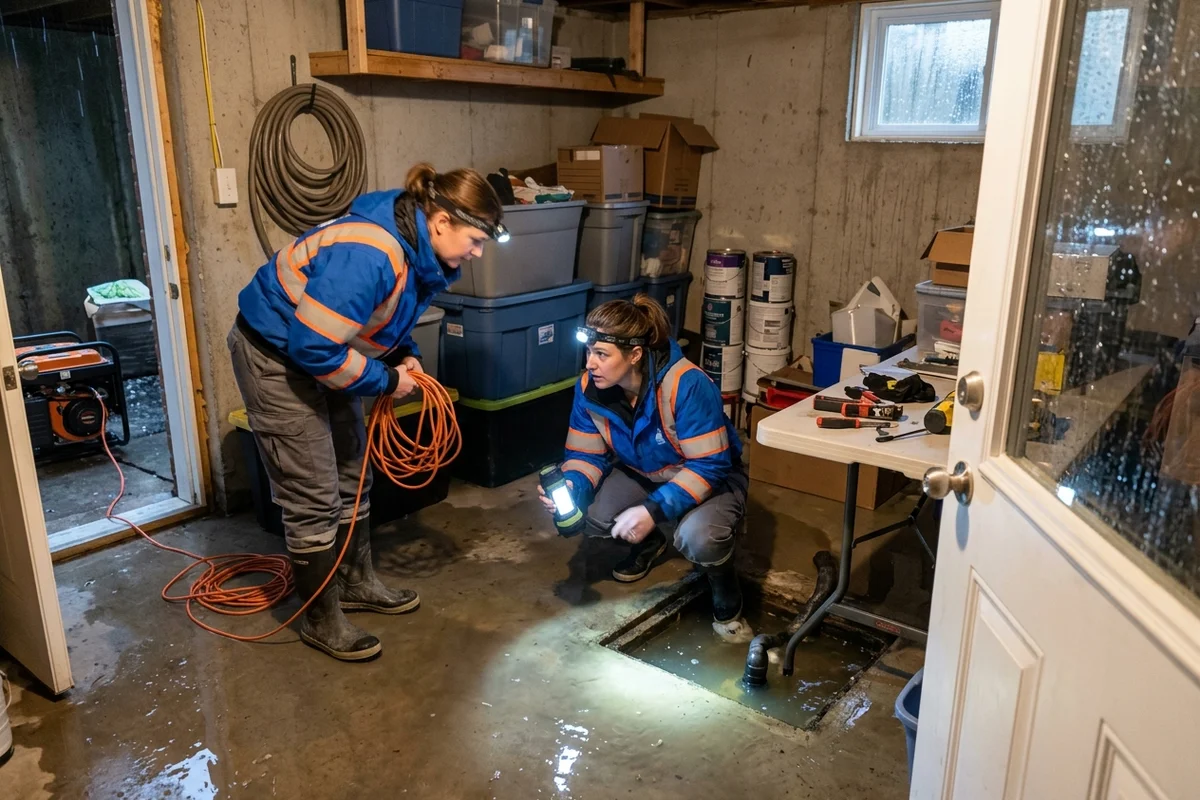
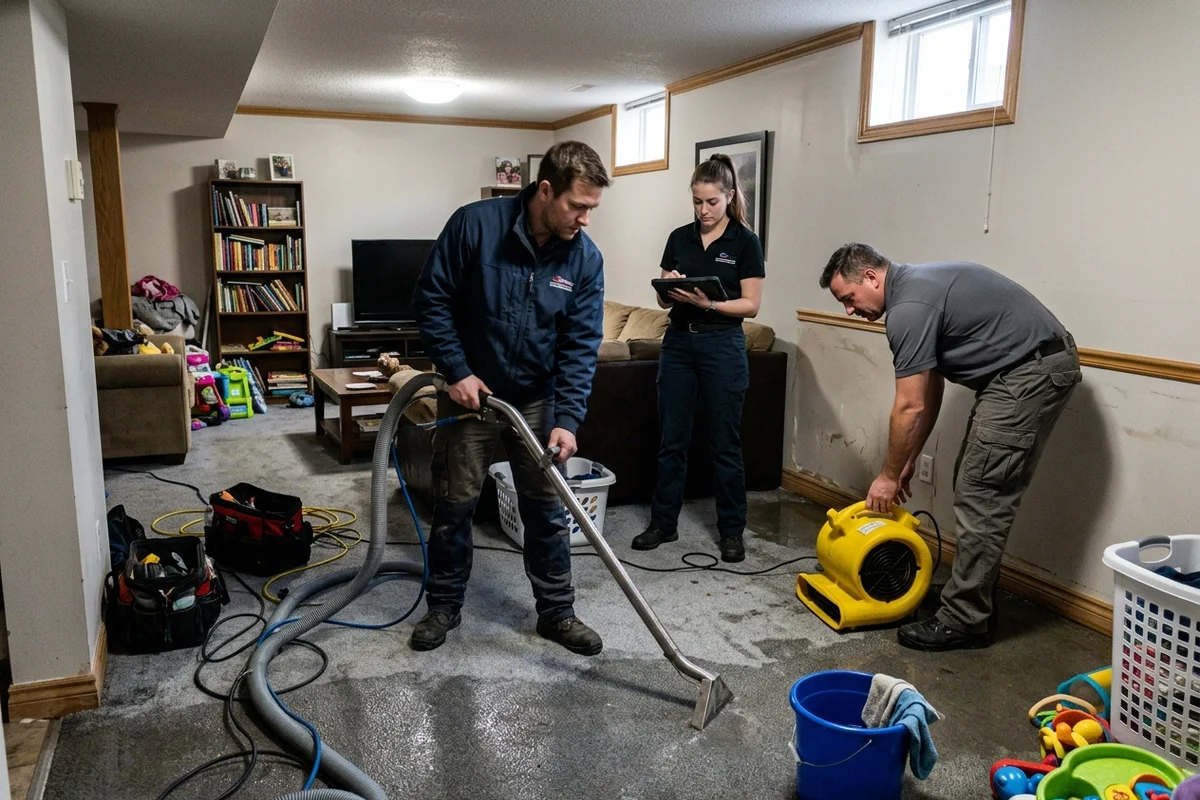
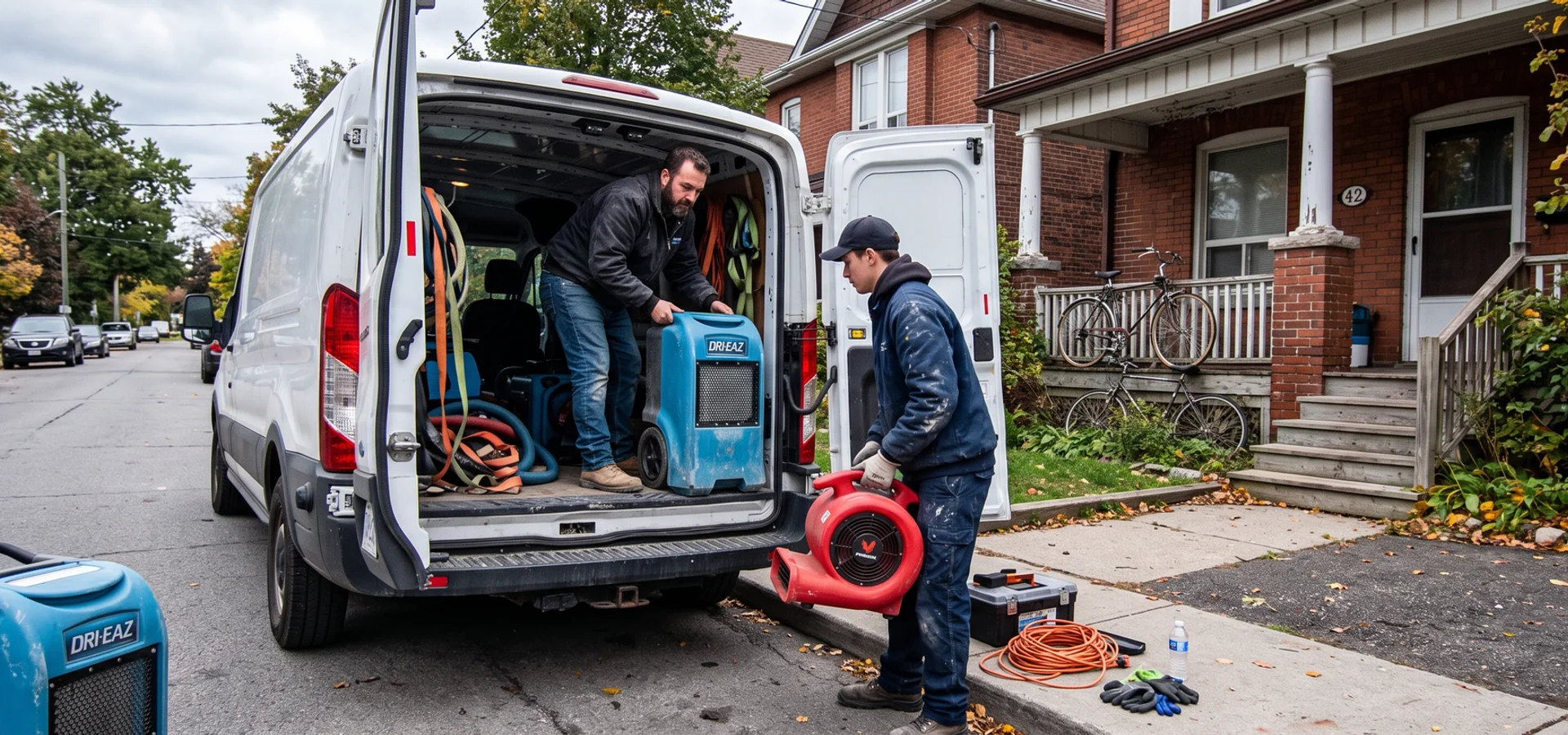
Our technicians arrive equipped with a truck-mounted extraction unit, submersible trash pumps and weighted extraction tools that pull water out of carpet and carpet underpad. Gas-powered extractors provide massive vacuum lift to pull deep-seated moisture from your subfloor.

We then take moisture readings to set up drying. The dispatch fee is quoted on the phone and waived when we extract on the same visit.
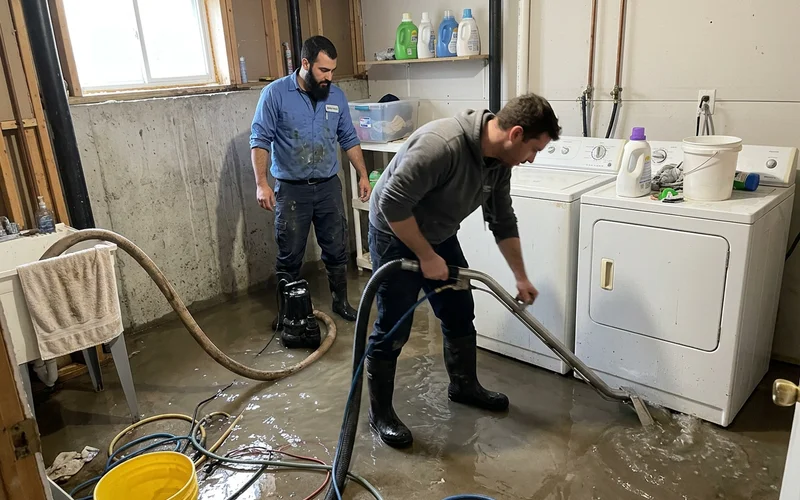
Two technicians operating a submersible trash pump and truck-mount extraction wand in a flooded Toronto basement laundry room

Insider Tip: Wood furniture stains bleed into wet carpet almost instantly. If you cannot move a heavy piece of furniture, slide small pieces of aluminum foil under the legs to protect your flooring.

The 90-Minute Response Standard: What Happens in the First Hour

Our dispatch window is 90 minutes. What you and the dispatch desk do in the first hour shapes how much of your basement can be saved. A fast response is crucial to stopping moisture before it ruins structural framing.

Here is exactly what you should expect during that critical first hour:

  1. Minute 0-5: the call. Dispatch asks for your postal code, the water source (pipe, sump, drain, groundwater) and the rough wet area. The emergency fee is quoted before a truck leaves.
  2. Minute 5-15: safety. Stay out of water near outlets or the panel. If sewage is present, keep children and pets upstairs. If you can safely shut the main water valve for a burst pipe, do it.
  3. Minute 15-30: photos. Take wide photos of each room and close-ups of the waterline on walls and contents. Your adjuster will ask for them, and they are harder to recreate later.
  4. Minute 30-60: protect what you can. Move valuables, papers and electronics upstairs. Lift furniture legs onto foil or blocks if it is safe. Do not pull up carpet or drywall yet.
  5. Minute 60-90: crew arrives. The crew confirms safety, photographs the loss, and starts bulk water removal.

Field note: if your sump pump has stopped because the power is out, tell dispatch. Heavy Toronto rain events often knock out neighbourhood power grids, causing a perfectly good pump to fail. Crews carry generators and portable pumps for exactly this situation.

Types of Water We Extract

Understanding the source of your flood dictates our exact cleanup approach. Not all water is treated equally under safety standards. We categorize the damage to figure out what building materials can be saved and what must be removed.

Water CategoryCommon SourcesCleanup Approach
Category 1 (Clean)Burst pipes, water heaters, clean sinksFastest to extract, often allows drying in place.
Category 2 (Grey)Sump failures, washing machines, old clean waterPadding and lower drywall typically require removal.
Category 3 (Black)Sewage backups, outside floodwaterFull PPE required, porous materials must be discarded.

Here is a detailed look at the categories:

  • Clean water (Category 1): Burst supply lines, water heater failures, and overflowing sinks fall into this group. Clean water is the fastest to extract and most likely to allow drying in place.
  • Grey water (Category 2): This covers sump pump failures, washing machine overflows, groundwater through the foundation, and clean water that has sat too long. Pad and lower drywall usually come out because the liquid carries soap, dirt, or minor contaminants.
  • Black water (Category 3): This involves sewage backups and outside floodwater. Extraction happens under full PPE and containment, and the job continues as sewage backup cleanup. Porous materials soaked in black water are treated as regulated waste and cannot be salvaged.

What Comes After Extraction

Extraction removes the water you can see, but hidden moisture poses the biggest threat to your property. Water easily travels beneath laminate flooring and soaks into concrete slabs. We rely on advanced diagnostic tools to find damp spots hiding behind your walls.

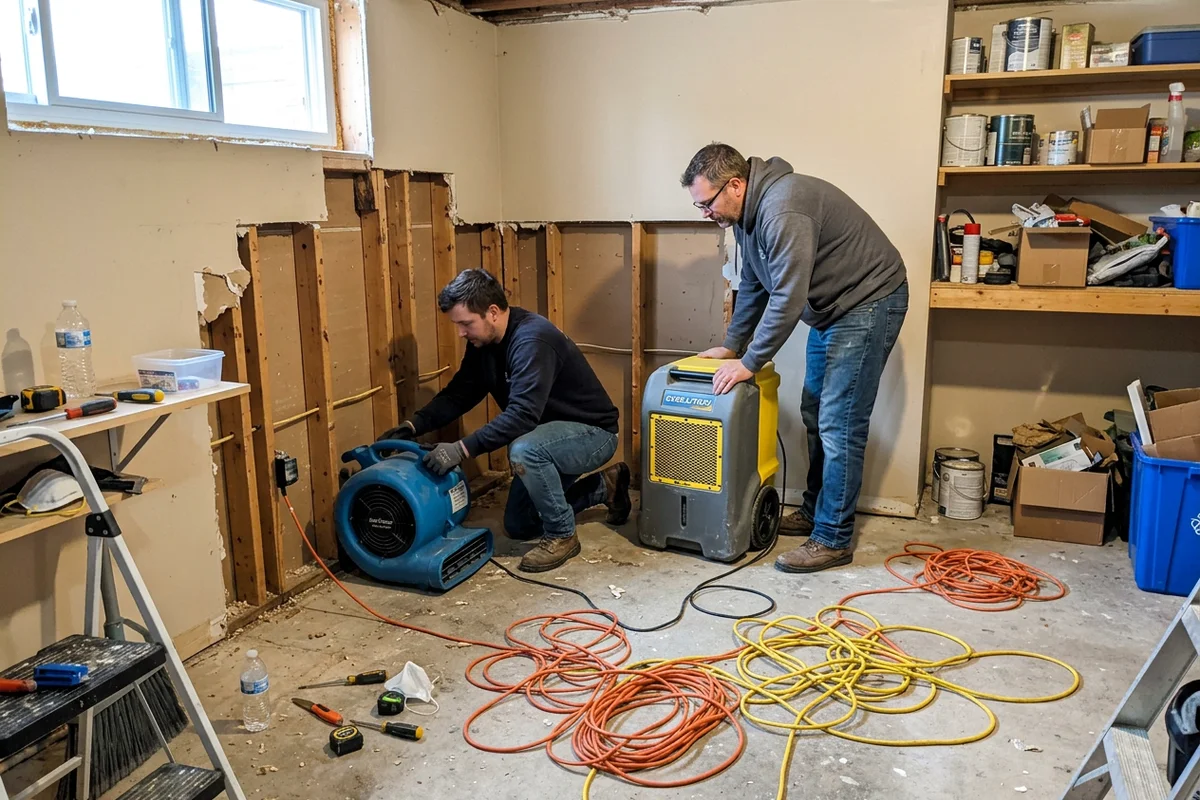
Moisture mapping with pin meters, pinless meters and a FLIR thermal imaging camera finds the water you cannot see. Our technicians scan drywall bases, baseboards, bottom plates and subfloor to locate trapped moisture. That map decides where the air movers and dehumidifiers go, and it starts the drying log your adjuster will read.

Most basements then need 3 to 5 days of structural drying. The moisture map serves as a living document that gets updated daily to prove the property is actually dry. Materials left wet past the 24-48 hour mould window are where growth starts, so drying begins on the same visit.

Insider Tip: Do not trust your hands to check if a carpet is dry. The surface fibers might feel perfectly fine while the dense foam padding underneath remains completely saturated.

Why People Try the Shop Vac First, and When It Stops Working

Many property owners attempt to clean up a flood themselves before realizing they need heavy-duty equipment. Standard household vacuums simply lack the power required for deep moisture removal. We want to share a few common things people say when they try the DIY route, and explain why it often leads to bigger problems.

The Limits of Household Equipment

“I thought I could handle it myself.” Our team considers a shop vac a great tool for a spilled bucket. It is the wrong tool for a basement. A standard wet vac uses a single motor to remove surface water a few litres at a time, which leaves the carpet backing and drywall base soaked. Truck-mount extraction pulls far more water per hour and reaches water trapped deeply inside the carpet pad.

“The water went down on its own.” Water draining through the floor drain does not take the moisture out of your walls with it. The concrete subfloor absorbs moisture and holds onto humidity for weeks. If the basement flooded above the floor, get the readings before deciding the space is safe.

Handling Costs and Insurance

“I didn’t want to pay a dispatch fee for a little water.” The fee is waived when we extract on the same visit. If it turns out you only need advice, dispatch will tell you that on the phone. Professional assessment prevents a small puddle from turning into a massive structural repair project.

“I was waiting to hear from my insurer first.” You do not need to wait for permission to protect your home. Mitigation is expected by insurers, and delaying extraction to wait for a call back can make more of the damage count as preventable. Call your insurer and our response team at the same time, and we will document everything for the adjuster.

Fast action is the best defense against long-term property damage. A flooded basement requires more than just a quick mop and a household fan to ensure your building remains structurally sound.

Our certified technicians are ready to handle your Emergency Water Extraction Toronto needs right now. You need heavy-duty equipment and specialized knowledge to dry your property properly.

Call our dispatch desk immediately to get a team headed to your door.
CAD Field Tariffs // Published Before You Call

Emergency Water Extraction Cost in Toronto by Category and Square Footage

Extraction is priced by the water category and the wet area. The dispatch fee is quoted on the phone and waived when we extract on the same visit, which is almost always.

Published Scope Bands

per extraction
Emergency Dispatch Fee (waived on same-visit extraction) $250 - $500 CAD
Water Extraction Cat 1 clean (under 500 sqft) $500 - $1,500 CAD
Water Extraction Cat 2 grey (500-1500 sqft) $1,500 - $4,000 CAD
Structural Drying after extraction (3-5 days) $1,500 - $5,000 CAD

What Moves the Price

Cost Factors
  • Water category

    Category 1 clean water under 500 sqft stays in the $500-$1,500 band. Grey water across a larger area moves into $1,500-$4,000.

  • Depth and area

    An inch across a laundry room is a short job. Six inches across a finished 1,000 sqft basement needs more equipment and hours.

  • Carpet and underpad

    Extracting carpet in place costs less than pulling and bagging saturated pad, which is sometimes the only safe option.

  • Power and access

    Storm outages mean we bring our own generator. Tight stairwells or condo access can add setup time.

Every quote itemises emergency fee, extraction, drying, cleanup, and permanent solution separately. Dispatch fee waived on same-visit extraction. Insurance direct-billing available on covered claims, subject to policy limits and adjuster approval.

Incident Timeline // Protocol Sequence

How Truck-Mount Extraction Works, Step by Step, From Pump-Out to Moisture Map

Extraction is more than pumping. The steps below are what happens between the truck arriving and the drying equipment switching on.

  1. STEP 01

    Safety check and photos

    We confirm power is safe to work around, identify the water source and category, and photograph everything before touching it.

  2. STEP 02

    Bulk water removal

    Submersible trash pumps handle deep standing water. The truck-mounted extraction unit follows, pulling water from low spots and floor drains.

  3. STEP 03

    Carpet and pad extraction

    Weighted extraction tools press water out of carpet and underpad. Pad that cannot be saved is lifted, bagged and logged.

  4. STEP 04

    Moisture mapping

    Pin and pinless meters plus a thermal imaging camera trace how far water wicked into drywall, baseboards and subfloor.

  5. STEP 05

    Drying setup and hand-off

    Air movers and dehumidifiers are placed to the map, first readings are logged, and you get a written note of what happens next.

Typical first visit: 2-5 hours on site, drying starts the same visit

Risk Reversal // Before Any Equipment Goes Down IN WRITING

Emergency Water Extraction: Price Confirmed Before We Start, Warranty After We Finish

This job is priced inside the published CAD bands above, itemised before equipment goes down, and closes with a written workmanship warranty. Insurance-covered claims are billed directly to your insurer, subject to policy limits and adjuster approval.

Field Terminal // Self-Serve Estimator FREE

Try Our Free Basement Flood Cleanup Cost Estimator

Estimate a CAD range for extraction, cleanup and drying based on water category, affected area and drying days.

Open Calculator
Technical Specifications // Protocol Integrity

6 Reasons GTA Homeowners Call Us When Water Is Still Standing

18 YRS

18 Years of Basement Flood Response Experience

Eighteen years of storm nights across the GTA means crews who work quickly and calmly in the worst hour of your week.

90 MIN

90-Minute Dispatch Window

Three trucks out of Toronto cover the GTA 24/7. Category 3 and standing water go to the front of the queue.

TRUCK-MOUNT

Truck-Mount Power

Truck-mounted extraction removes far more water per hour than portable units or a shop vac, which shortens drying.

FEE WAIVED

Dispatch Fee Waived

The $250-$500 dispatch fee is quoted on the phone and waived when we extract on the same visit.

IICRC S500

Documentation From Minute One

Photos and readings start before extraction so your adjuster sees the loss as it was, not after cleanup.

OUTAGE READY

Own Generators for Outages

Storm outages do not stop the job. Crews carry generators for pumps and extraction.

Verified Case Dossiers // GTA Residences

3 Late-Night Extractions Across the GTA

Ravi N. Rexdale
"Truck-mount extraction pulled out what my shop vac could not touch in three hours. $1,350 for about 400 sqft, and the dispatch fee was waived because they extracted on the same visit."
Colleen H. The Beaches
"Called at 11 p.m. during the storm, truck was on the street 80 minutes later. Carpet and underpad came out that night, Economical was billed directly."
Tom V. York Mills
"Grey water across 1,100 sqft. Extraction was $3,200, right in the Cat 2 band they publish. No surprises on the invoice."
FAQ Archive // Operational Guidelines

10 Emergency Water Extraction Questions, Answered Plainly

How fast can you get to my flooded basement?

Our dispatch window is 90 minutes across Toronto, Etobicoke, North York, Scarborough, Vaughan and Mississauga, 24 hours a day including weekends and holidays. When you call, the dispatch desk takes your postal code, the water source and a rough estimate of the wet area, then assigns the nearest truck. Category 3 sewage and deep standing water are prioritised ahead of leaks that have already stopped. On a normal night most crews arrive well inside the window. During a citywide storm, when hundreds of basements flood at once, we triage by severity and tell you honestly if the window is running long, so you can plan instead of waiting by the door. While the truck is on the way, dispatch walks you through safety steps and what to photograph.

How much does emergency water extraction cost in Toronto?

Category 1 clean water under 500 sqft is $500-$1,500 CAD. Category 2 grey water across 500-1,500 sqft is $1,500-$4,000 CAD. The emergency dispatch fee of $250-$500 is waived when we extract on the same visit. Drying is priced separately at $1,500-$5,000 for a typical 3-5 day cycle. Depth of water, carpet and underpad, power outages and access are the main things that move the price within a band. You get the range on the phone and a written number before we start.

Is the dispatch fee waived?

Yes, when we extract on the same visit, which covers almost every call. The fee only applies if we arrive, assess and you decide not to go ahead, or if the water has already been removed and you only need an assessment. It is quoted on the phone before the truck leaves.

Can my carpet be saved after extraction?

Sometimes. With Category 1 clean water extracted within 24 to 48 hours, carpet can often be dried in place, although the underpad usually needs replacing because it holds water like a sponge. Category 2 water usually means pad goes and carpet is cleaned and assessed. Category 3 sewage means carpet and pad both go. We tell you on site, and the decision is documented with photos for your adjuster.

Should I turn off the power before you arrive?

Only if you can reach the electrical panel without standing in water. If water is near outlets, the panel or the furnace, stay out of the basement and tell dispatch. If the panel is underwater or you are unsure, call Toronto Hydro. Our crew confirms the space is safe before anyone steps in.

Do you extract water in condos and townhouses?

Yes. We work in condo units, townhouses and stacked towns, coordinating with property management for access, elevator protection and truck parking. Portable extraction units reach units where hoses from the truck cannot.

What happens after the water is out?

We map moisture in the drywall, baseboards and subfloor, set up air movers and dehumidifiers, and start a daily drying log. Most basements need 3 to 5 days of structural drying before the readings meet the dry standard.

Can I just use a shop vac and fans?

For a small clean-water spill caught immediately, possibly. For anything across a whole room, a shop vac removes surface water but leaves the carpet pad, drywall base and subfloor wet. That hidden moisture is what grows mould 48 to 72 hours later.

Will my insurance pay for extraction?

Extraction is usually part of a covered sudden water loss, subject to your policy and deductible. We photograph and document from the first minute and bill directly to Aviva, Intact, Definity, Wawanesa, Economical, TD and Belair, subject to your policy limits and adjuster approval.

Do you respond overnight in Rexdale, The Beaches and York Mills?

Yes. Overnight calls are a normal part of our week, and all three neighbourhoods sit inside the 90-minute dispatch window.

Question not covered here? Call (416) 555-0100 Send a Message

Dispatch desk open 24/7 across the GTA

Water Still Standing? A Truck Can Be Rolling in Minutes.

Give dispatch your postal code and the water source. The fee is quoted before we leave, and waived when we extract on the same visit.

  • Emergency fee quoted upfront
  • Written CAD scope first
  • 1-5 year written warranty

Short Dispatch Intake

DISPATCH ACTIVE

Four fields and the dispatch desk calls you back. Your page is attached so we know which service you were reading about.

Need something non-urgent? Send a Message to our GTA coordination desk.

Call (416) 555-0100 CAD Scope Intake