Emergency Operations: 24/7 GTA Dispatch
(416) 555-0100

Documentation // Adjuster Coordination // Direct Billing

Basement Flood Toronto: Basement Flood Insurance Claim Assistance Toronto, IICRC S500 Documentation, Adjuster Coordination and Direct Billing

By The Basement Flood Toronto Crew

Basement flood insurance claim assistance in Toronto is IICRC S500 documentation (moisture readings, water category, photo log, contents inventory) plus adjuster coordination and direct billing to Aviva, Intact, Definity, Wawanesa, Economical, TD and Belair, subject to your policy limits and adjuster approval.

We cannot decide what your policy covers, and we will never tell you it is covered before your adjuster does. What we can do is build the claim file properly from the first hour, so the conversation with your insurer is about facts, not guesses.

  • 18 Years GTA Basement Flood Response
  • IICRC WRT, ASD, AMRT, CDS Certified
  • 24/7 Dispatch, 90-Minute Response
  • Insurance Direct-Billing, Subject to Policy Limits
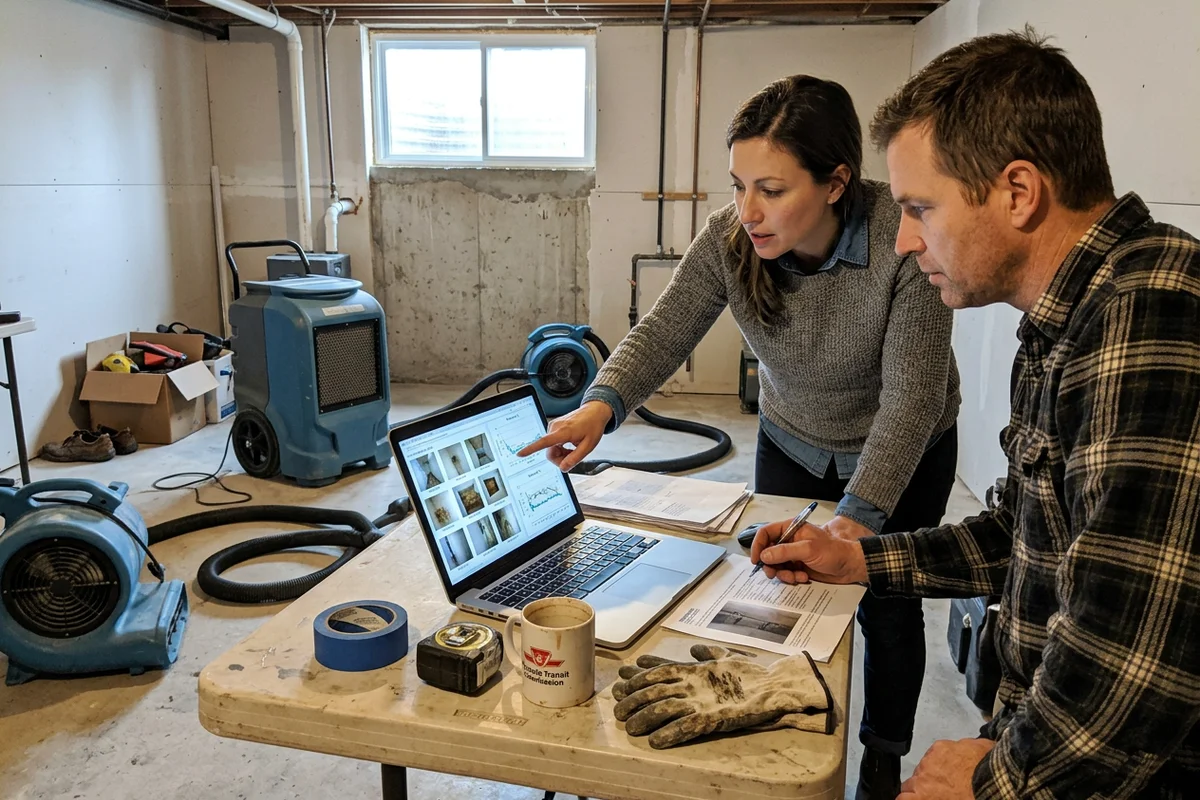
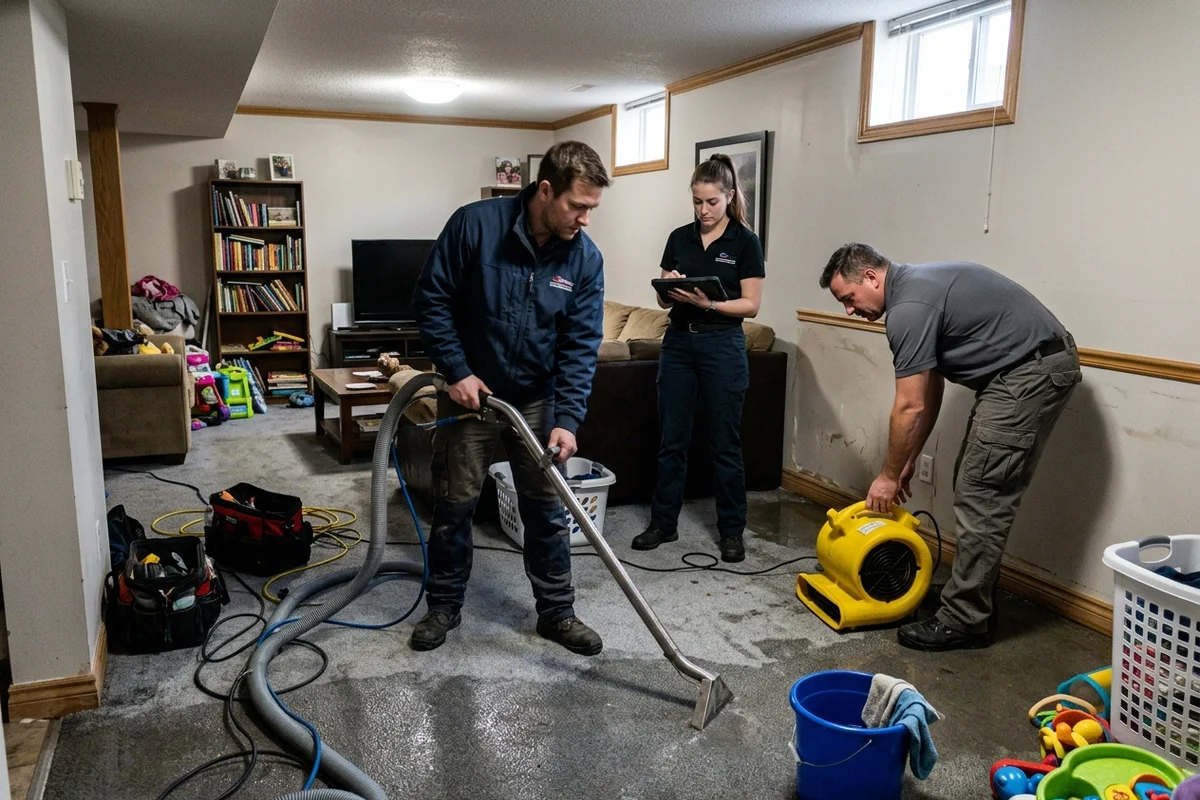
Project coordinator and field technician reviewing an IICRC S500 documentation package on a laptop in a basement
Published Range // Insurance Claim Assistance CAD

From

$3,500 CAD

typical covered scope

Full bands
  • 18 Years of Basement Flood Response
  • IICRC WRT, ASD, AMRT, CDS Certified
  • 24/7 Dispatch, 90-Minute Response
  • Insurance Direct-Billing
  • 5-Star Customer Satisfaction
  • WSIB + $5M Pollution Liability

Insurance Claim Assistance Toronto: What It Means, and What It Does Not

Most Ontario policies cover sudden water damage while excluding gradual seepage. Sewer backup and overland water usually require separate endorsements on your plan. We cannot decide your final coverage and never promise a specific outcome.

What we actually do is document the physical loss thoroughly from the start. Our clear scope separates covered and uncovered items to make the claims process smoother. Meeting the insurance adjuster directly on site helps clarify the situation.

We bill the insurer directly for approved work to take a massive burden off your shoulders. Jenna Park, our project coordinator, handles all the complicated paperwork for you.

ActionWho Handles It?
Decides final coverageInsurance Adjuster
Documents moisture and damageOur Restoration Team
Deducts the policy deductibleInsurance Carrier
Meets on site for inspectionOur Team & Adjuster

The adjuster is the person who actually decides your final coverage. Your policy deductible comes off any final covered amount. We make sure the adjuster has every detail needed to decide quickly.

Endorsements for specific issues often have a strict sub-limit. Our team bills directly for approved work, subject to your policy limits and the adjuster’s final say.

This arrangement applies to carriers like Aviva, Intact, Definity, Wawanesa, Economical, TD, and Belair. We want to be clear that we are not a preferred vendor for any of them. Working independently means we advocate solely for your best interests.
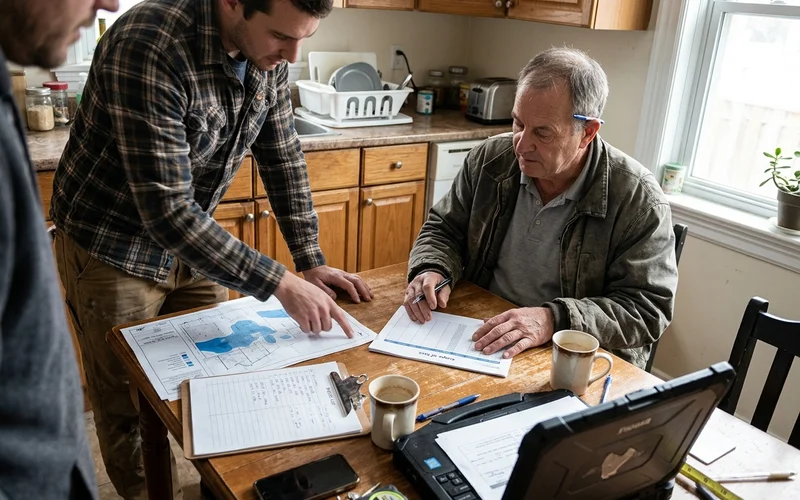
Two crew members laying out a photo log and moisture map for an insurance adjuster on a table in a Toronto home

Does Insurance Cover Basement Flooding in Ontario? The 6 Coverage Types Explained

Every property policy is completely different. These are the six coverage areas that come up on almost every basement flood in Toronto we document.

We always advise confirming these details with your own policy wording or insurance broker. Understanding your limits prevents unpleasant surprises later on.

  1. Sudden and accidental water damage. Water released suddenly from inside the house falls into this category. A burst supply line, a failed water heater, or a washing machine hose are common culprits. Most standard home policies include this basic protection.
  2. Sewer backup endorsement. Sewage or water backing up through drains happens when the city sewer surcharges or your lateral blocks. This typically affects the floor drain first. Usually, this protection is an add-on with its own specific sub-limit.
  3. Overland water coverage. Water entering from outside over the ground creates massive headaches. River flooding or intense rain running in through window wells are prime examples. Also, this is usually purchased as a separate add-on.
  4. Groundwater and seepage. Water pushing through foundation cracks or the cove joint happens over time. The gradual seepage exclusion usually applies to these situations. Some select insurers do sell limited ground water coverage for this exact issue.
  5. Contents coverage. Your personal belongings in the basement fall under this category. A payout is subject to limits and sometimes includes calculated depreciation. A detailed contents inventory helps support this crucial part of your claim.
  6. Additional living expenses. Sometimes a home becomes completely uninhabitable during repairs. If a basement tenant must relocate, some policies cover their temporary costs. Landlord policies might also include lost rental income during the vacancy.

Plain rule: If someone tells you a flood is covered before reading your policy, they are guessing. We document the facts first and let the adjuster decide the outcome.

What Goes Into an IICRC S500 Claim File

Our certified IICRC S500 documentation package provides complete transparency. The file includes a loss-as-found photo log to show the initial damage. We establish the specific water source and category using clear physical evidence.

A detailed moisture map records readings on your drywall, subfloor, joists, and framing. Our team writes the scope of loss in an adjuster-friendly format like Xactimate. Professional software makes it much easier for the carrier to process the file.

We also include the daily drying log through to the final dry-standard verification. This comprehensive package reaches your adjuster by day two.

  • Initial loss-as-found photo documentation
  • Specific water category and source evidence
  • Detailed moisture maps with framing readings
  • Line-item scopes written in Xactimate
  • Daily drying logs tracking progress

Later in the process, your insurer may ask for a signed proof of loss form. Our detailed file gives you the exact numbers needed to complete it confidently. Proper equipment removes the guesswork from the reporting process.

We use tools like FLIR thermal imaging cameras and Delmhorst moisture meters to capture accurate data. Accurate readings ensure nothing is missed during the assessment.

Direct Billing, Step by Step

With direct billing, the insurer pays us directly for the approved scope of work. You only pay your specific deductible and any items the adjuster does not approve. We explain the payment arrangement in writing before any actual work starts.

Excluded causes or personal upgrades are examples of out-of-pocket costs. Our team never bills you for items the insurer has already approved. This transparent process keeps your financial obligations clear from day one.

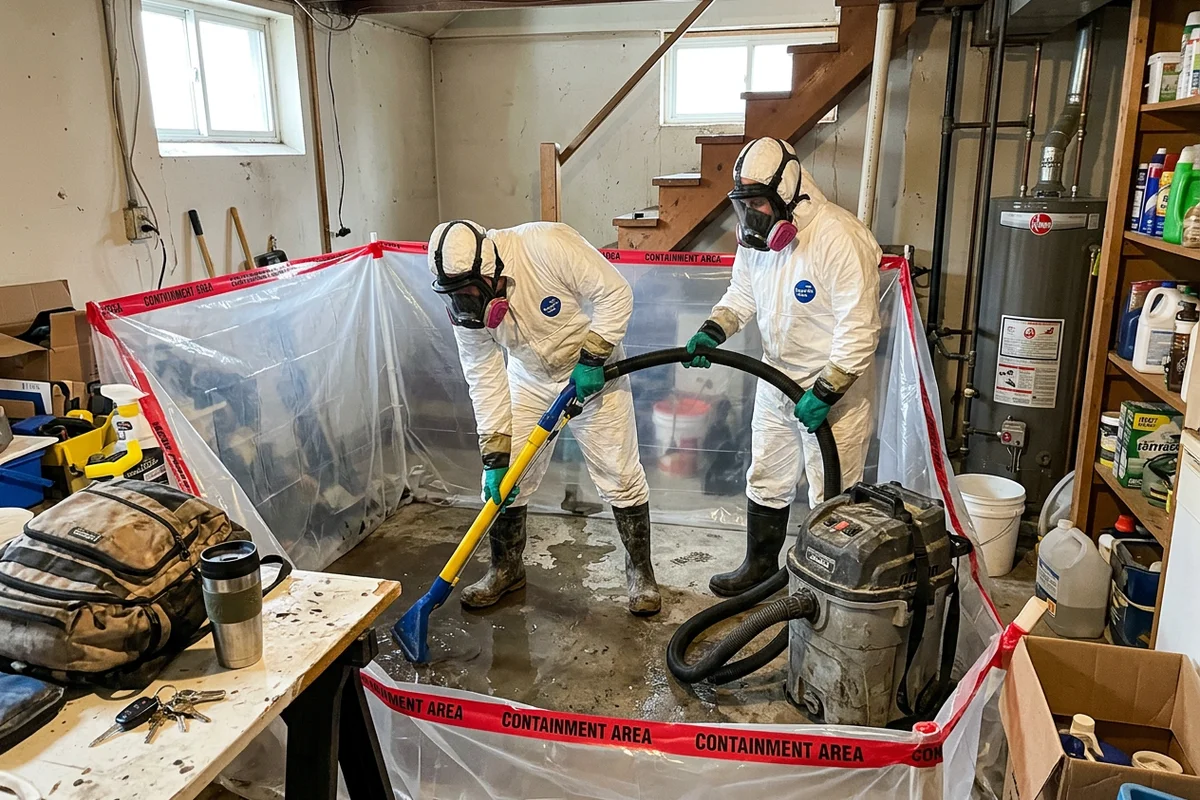
To understand the physical work involved, see our guides on water damage restoration and sewage backup cleanup. We coordinate the specialized cleanup so you can focus on getting your routine back on track. Professional mitigation requires careful planning and execution.

Here is how our direct billing process flows:

  1. Initial Assessment: We scope the damage and submit the detailed file.
  2. Adjuster Review: The carrier reviews the evidence and approves specific line items.
  3. Written Agreement: You review our payment arrangement detailing your deductible.
  4. Direct Payment: The insurer sends payment directly to us for the covered mitigation.

Why Homeowners Fear Filing a Basement Flood Claim

“My Premiums Will Go Up”

Claims history can absolutely affect your future premiums. Discussing this fair concern with your insurance broker is always a smart move. We believe the bigger mistake is skipping vital mitigation while you decide.

Getting the standing water out quickly prevents secondary mould growth. Our crew focuses on finishing the proper documentation first. You can always decide whether to file a claim later with real numbers in hand.

“The Adjuster Will Lowball Me”

Adjusters base their final decisions on documented physical evidence. We build a complete file with exact moisture readings, clear photos, and a line-item scope. A verbal estimate leaves too much room for painful disagreements.

Our thorough approach provides the undeniable proof needed for a fair evaluation. This level of detail protects your best interests.

“I Don’t Understand My Own Policy”

Most people find insurance terminology incredibly confusing. We explain complicated terms like sewer backup, overland water, and seepage in plain language. A quick conversation clears up a lot of the initial anxiety.

Our team shows you exactly where to look in your specific policy wording. Your broker can then easily confirm the finer details.

“The Paperwork Will Take Over My Week”

Administrative headaches are exactly what Jenna and our crew handle for you. We keep the entire file moving forward efficiently. You remain in control and make the important decisions.

Our administrative team receives the adjuster’s questions directly. This direct communication means you are not stuck playing telephone all week.
CAD Field Tariffs // Published Before You Call

What Insurance-Covered Basement Flood Scopes Cost in Toronto, and What You Pay

On a covered claim the insurer pays the approved scope and you pay your deductible plus anything the adjuster does not approve. These are the typical bands, and the scope always shows which lines are covered and which are yours.

Published Scope Bands

typical covered scope
Typical insurance-covered scope total (extraction, drying, cleanup) $3,500 - $15,000 CAD
Emergency Dispatch Fee (waived on same-visit extraction) $250 - $500 CAD
Sewage Backup Cleanup Cat 3 (IICRC S500) $2,000 - $10,000 CAD
Structural Drying (3-5 day equipment + monitoring) $1,500 - $5,000 CAD

What Moves the Price

Cost Factors
  • Your deductible

    Usually $500 to $2,500 on Ontario home policies. It comes off the approved amount no matter who does the work.

  • Endorsement sub-limits

    Sewer backup and overland water endorsements often carry their own limits, for example $10,000 to $50,000. Scope above the limit is out of pocket.

  • Excluded causes

    Gradual seepage, long-term leaks and wear are usually excluded. We separate those items so covered work is not held up.

  • Upgrades

    Insurers pay like-for-like. Better materials in the rebuild are your choice and your cost, on their own lines.

Documentation and adjuster coordination are part of every restoration scope we complete. Covered totals depend on your policy, deductible and adjuster approval. Every quote itemises emergency fee, extraction, drying, cleanup and permanent solution separately.

Incident Timeline // Protocol Sequence

How We Build an IICRC S500 Claim File, From First Photo to Final Reading

Adjusters approve what they can verify. This is the file we build on every job, whether or not the loss ends up covered.

  1. STEP 01

    Loss as found

    Before anything moves: wide and close photos of every affected room, waterlines with a scale, the source, and date-stamped notes.

  2. STEP 02

    Category and cause

    Water source and IICRC category recorded with evidence, because category and cause are what coverage decisions turn on.

  3. STEP 03

    Moisture map and readings

    Readings on drywall, subfloor, joists and framing, mapped by location, so the extent of the loss is measured rather than estimated.

  4. STEP 04

    Scope of loss and contents inventory

    Line-item scope in an adjuster-friendly format, with covered and uncovered items separated, plus a photo inventory of damaged contents.

  5. STEP 05

    Daily drying log

    Relative humidity, grains per pound and material readings every day until the dry standard is met.

  6. STEP 06

    Final readings and handover

    Dry-standard verification, completed contents log and the full photo package delivered to your adjuster, with direct billing on approved scope.

Documentation package to your adjuster by day two

Risk Reversal // Before Any Equipment Goes Down IN WRITING

Insurance Claim Assistance: Price Confirmed Before We Start, Warranty After We Finish

This job is priced inside the published CAD bands above, itemised before equipment goes down, and closes with a written workmanship warranty. Insurance-covered claims are billed directly to your insurer, subject to policy limits and adjuster approval.

Technical Specifications // Protocol Integrity

6 Reasons Homeowners Want Us Handling the Claim Paperwork

18 YRS

18 Years of Basement Flood Response Experience

Eighteen years of Ontario water claims means we know what adjusters ask for and what slows a file down.

HONEST

Never a Coverage Promise

We explain endorsements and exclusions plainly and let your adjuster make the coverage call. No surprises later.

DAY 2

Day-Two S500 Package

Photos, category, readings and scope reach your adjuster by day two, which is often what gets same-day approvals.

DIRECT BILL

Direct Billing to 7 Insurers

We bill directly to Aviva, Intact, Definity, Wawanesa, Economical, TD, Belair, subject to your policy limits and adjuster approval.

ONE CONTACT

Dedicated Coordinator

Jenna Park, our project coordinator, handles adjuster communication so the paperwork moves faster than the drying cycle.

SEPARATE LINES

Covered and Uncovered Split

The scope separates what the insurer is likely to review from what is yours, so approvals are not held up by upgrades.

Verified Case Dossiers // GTA Residences

3 Toronto Claims Where the File Did the Talking

Rebecca T. Forest Hill
"Intact approved same-day after the IICRC documentation came in. Moisture readings, category and photos were all in one package, so there was nothing to argue about."
Sanjay M. Malvern, Scarborough
"They were honest that our seepage would likely be excluded and separated the covered burst-pipe scope from the rest. Economical paid the $6,200 covered portion directly."
Diane F. Etobicoke Centre
"The adjuster visit took 40 minutes because the drying log was already done. Aviva covered the $8,400 scope."
FAQ Archive // Operational Guidelines

10 Basement Flood Insurance Questions Ontario Homeowners Ask

Will my home insurance cover a basement flood?

It depends on what caused the water and what endorsements your policy carries, and only your insurer can confirm coverage. As a general pattern in Ontario, sudden and accidental water damage from inside the house, such as a burst supply line or failed water heater, is covered by most standard home policies. Sewage that backs up through a floor drain is usually covered only if you have a sewer backup endorsement. Water that enters from outside over the ground in a storm is usually covered only with overland water coverage. Gradual seepage through the foundation, long-term leaks and wear are usually excluded. Your deductible applies to any covered claim, and endorsements often have their own sub-limits. Our role is to document the loss properly so your adjuster can make the decision on evidence, and to bill directly on the approved scope, subject to your policy limits and adjuster approval.

Which insurance companies do you direct-bill?

We bill directly to Aviva, Intact, Definity, Wawanesa, Economical, TD Insurance and Belair Direct, along with most other major Ontario insurers, subject to your policy limits and adjuster approval. Direct billing means the insurer pays us for the approved scope. You pay your deductible and any items the adjuster does not approve. We are not a preferred vendor for any insurer and we never claim to be.

What is the difference between sewer backup and overland water coverage?

Sewer backup coverage pays for damage when sewage or water comes up through your drains, usually the basement floor drain, because the municipal sewer surcharged or your lateral backed up. Overland water coverage pays for damage when water enters from outside, over the surface of the ground, such as a river rising or intense rainfall running in through window wells or doors. They are separate endorsements on most Ontario policies, and a July storm can involve either or both. Check which ones your policy includes and what the sub-limits are.

What does the adjuster look for?

The cause of loss, when it happened, the water category, how far the water spread, what was damaged, and whether mitigation started promptly. Adjusters want evidence rather than descriptions: photos of the loss as found, moisture readings, a drying log, a line-item scope and a contents inventory. That is exactly the package we deliver by day two.

Should I call my insurer or a restoration company first?

Both, at the same time. Report the loss to your insurer's claims line to start the claim, and book mitigation immediately. Insurers expect you to prevent further damage and generally will not want you to wait for an adjuster before extraction starts. Waiting can make part of the damage look preventable.

What if my claim is denied?

Ask the insurer for the specific policy wording behind the decision in writing. Sometimes part of a claim is covered even when the rest is not, which is why we separate items on the scope. If the loss is not covered, you still have the documentation, and you decide what work to proceed with at our published rates.

Do I pay anything upfront?

On a covered claim with direct billing, you typically pay your deductible and any items the adjuster does not approve. If coverage is still being decided, we explain the payment arrangement in writing before work starts, so nothing is a surprise.

Can my insurer make me use their contractor?

In Ontario you can choose your own restoration contractor. Your insurer may recommend one from its network, and you are free to use them or someone else. We coordinate directly with your adjuster either way.

Is groundwater seepage ever covered?

Rarely under standard policies, because gradual seepage through foundation cracks is usually treated as maintenance. Some insurers offer limited ground water endorsements. When seepage is part of a larger covered event, we separate the seepage-related items so the covered portion can move.

Do you meet adjusters in Forest Hill, Malvern and Etobicoke Centre?

Yes. We meet adjusters on site across Toronto, Etobicoke, North York, Scarborough, Vaughan and Mississauga, including Forest Hill, Malvern and Etobicoke Centre.

Question not covered here? Call (416) 555-0100 Send a Message

Dispatch desk open 24/7 across the GTA

Start the Claim File Before the First Carpet Comes Out.

Call dispatch and the crew photographs, measures and logs the loss as found, then sends your adjuster a complete IICRC S500 package by day two.

  • Emergency fee quoted upfront
  • Written CAD scope first
  • 1-5 year written warranty

Short Dispatch Intake

DISPATCH ACTIVE

Four fields and the dispatch desk calls you back. Your page is attached so we know which service you were reading about.

Need something non-urgent? Send a Message to our GTA coordination desk.

Call (416) 555-0100 CAD Scope Intake