Emergency Operations: 24/7 GTA Dispatch
(416) 555-0100

Crisis Line // Water Coming In Right Now

Basement Flood Toronto: Flooded Basement Emergency Response Toronto, What to Do in the First 60 Minutes and Who Arrives to Help

By The Basement Flood Toronto Crew

Flooded basement emergency response in Toronto is the first-60-minutes crisis service for a basement that is taking on water right now: safety triage by phone, 90-minute crew dispatch, water source isolation, extraction and adjuster-ready documentation, with the emergency fee ($250-$500 CAD) quoted before a truck leaves.

If you are reading this with water on the basement floor, call first and read second. The dispatch desk will tell you what to do in the next ten minutes, which calls can wait, and when the crew will be at your door.

  • 18 Years GTA Basement Flood Response
  • IICRC WRT, ASD, AMRT, CDS Certified
  • 24/7 Dispatch, 90-Minute Response
  • Insurance Direct-Billing, Subject to Policy Limits
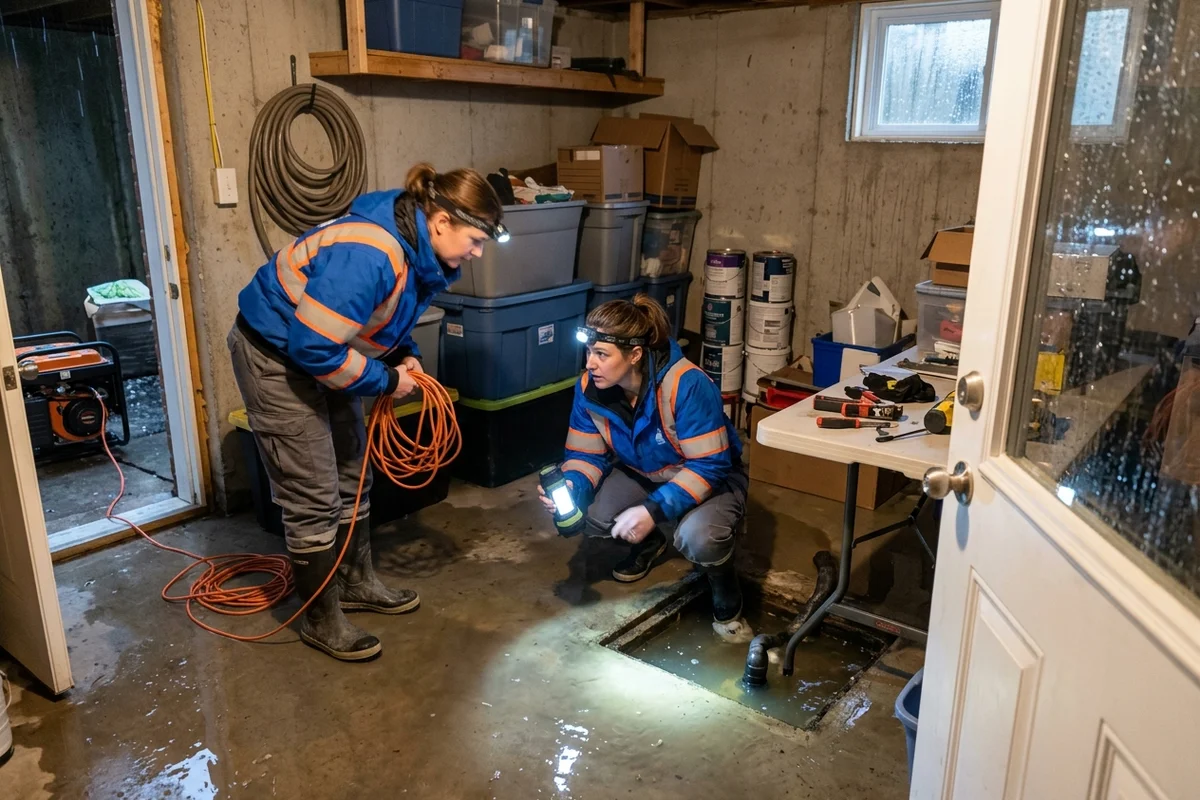
Two emergency technicians with headlamps and a portable generator assessing a flooded basement during a power outage
Published Range // Flooded Basement Emergency CAD

From

$250 CAD

first-visit emergency scope

Full bands
  • 18 Years of Basement Flood Response
  • IICRC WRT, ASD, AMRT, CDS Certified
  • 24/7 Dispatch, 90-Minute Response
  • Insurance Direct-Billing
  • 5-Star Customer Satisfaction
  • WSIB + $5M Pollution Liability

What Flooded Basement Emergency Response Means

Seeing water pooling around your feet is a stressful experience for any property owner.

We know exactly how overwhelming those first few moments feel.

Providing proper Flooded Basement Emergency Response Toronto requires a calm, systematic approach. Our dispatch team is here to walk you through the immediate safety steps first. The order of the calls you make right now truly matters.

We prioritize checking your electrical panel, gas appliances, and any signs of contaminated water. This initial safety check happens before we even look at the water source or call your insurer. Our crews then arrive quickly with heavy-duty extraction pumps and portable power for outages. They begin documenting everything exactly as they find it, which your claims adjuster will definitely ask for later.

This page is dedicated to that critical first hour of a basement flood in Toronto. We handle this very differently from planned waterproofing or a slow leak you noticed last week. The goal of emergency response is simple: keep people safe, stop more water from coming in, get the bulk of it out, and record the damage. Our team knows that everything else, from drying to rebuilding, depends entirely on those four things.
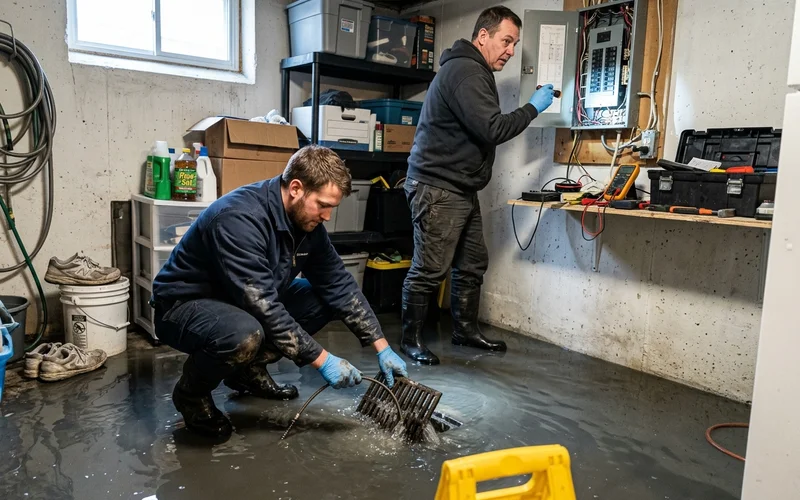
Two technicians in PPE checking a floor drain backup and the electrical panel area in a flooded Toronto basement

Flooded Basement, Who to Call: The 4 Numbers You Need in the First 60 Minutes

Having the right contacts handy saves you from a lot of panic during a crisis. We recommend saving these numbers in your phone right now, long before the next storm hits.

  1. Our dispatch desk: (416) 555-0100. A quick call gets you 24/7 triage, vital safety instructions, and a crew at your door within a 90-minute window. We always quote the emergency fee upfront, so there are no surprises.
  2. 311 Toronto. Reporting a sewer backup during a heavy storm allows the city to check for municipal sewer blockages. Our team wants you to know that while the city will not clean your property, this report is essential for neighbourhood tracking and often supports your insurance claim.
  3. Toronto Hydro. Reaching out to them is mandatory if your electrical panel or meter is submerged. We need the power cut before anyone can safely step into the affected area. The emergency number is conveniently located on your utility bill and their official website.
  4. Your insurer’s 24/7 claims line. Making this call officially starts your first notice of loss process. We suggest giving them the date, time, and water source, and letting them know a restoration crew is already on the way.

Gas warning: if you smell gas, or a gas furnace or water heater has been submerged, leave the house and call 911 or Enbridge Gas’s emergency line from outside. Do not switch anything on or off.

The Most Common Causes of a Sudden Basement Flood in Toronto

Understanding how water gets in helps you react faster when things go wrong. We see a few recurring culprits across local neighbourhoods during our emergency calls.

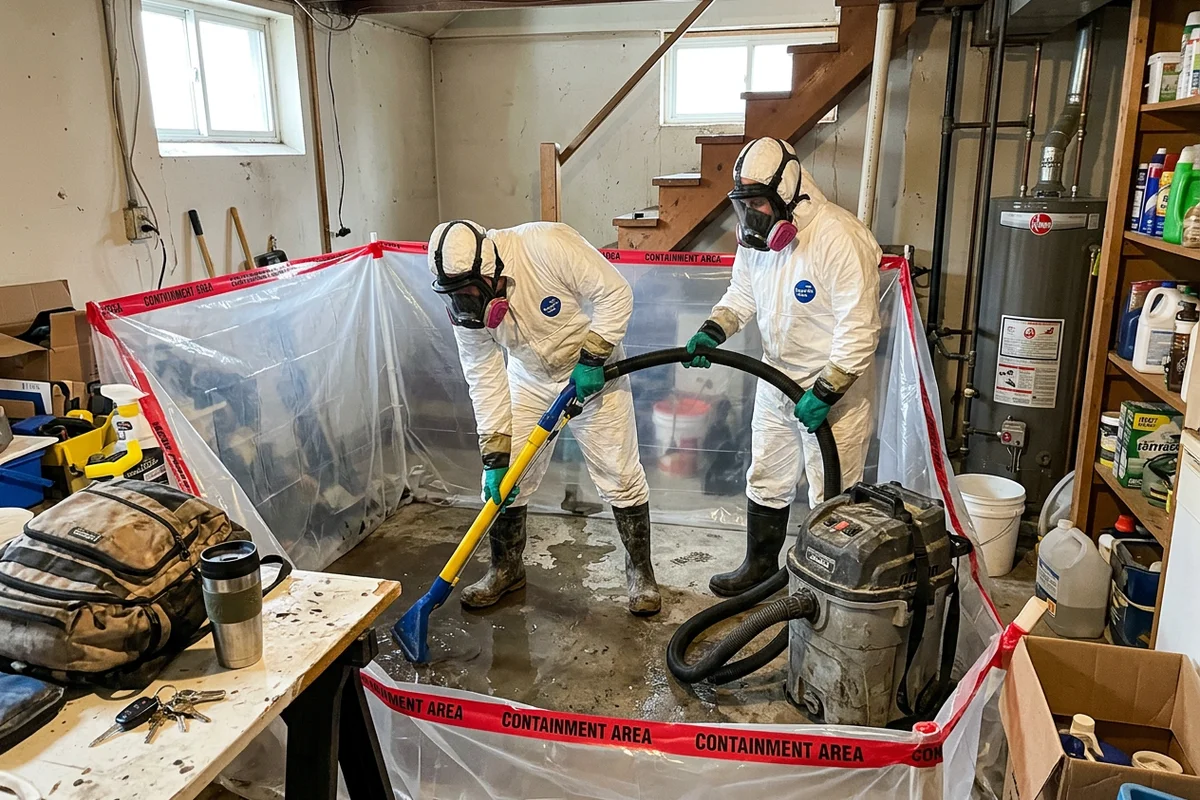
Floor drain sewer backup. Heavy storms often overwhelm the combined, surcharging sewers found in older Toronto districts. We regularly see raw sewage push back up through the lowest drain openings. This dangerous situation classifies as Category 3 contamination, requiring specialized protective gear to handle safely.

Sump pump failure. Aging equipment, a stuck float switch, or a sudden power outage can stop a pump right when you need it most. Our trucks always arrive equipped with a portable generator for exactly this reason. Powering the system back up lets the pump do its job while our technicians extract the overflow.

Burst pipes and supply lines. February deep freezes frequently lead to frozen pipes, while failed washing machine hoses or aged water heaters can let go at any time. We usually classify this as a clean water event, which is typically covered by your provider as a sudden loss. The cleanup process moves much faster when there are no hazardous contaminants involved.

Groundwater and overland water. Intense storms or rapid spring thaws easily saturate the heavy clay soil surrounding many local foundations. We often find that this extreme pressure pushes moisture right through tiny foundation cracks or pours in through overwhelmed window wells.

What the Crew Does When They Arrive

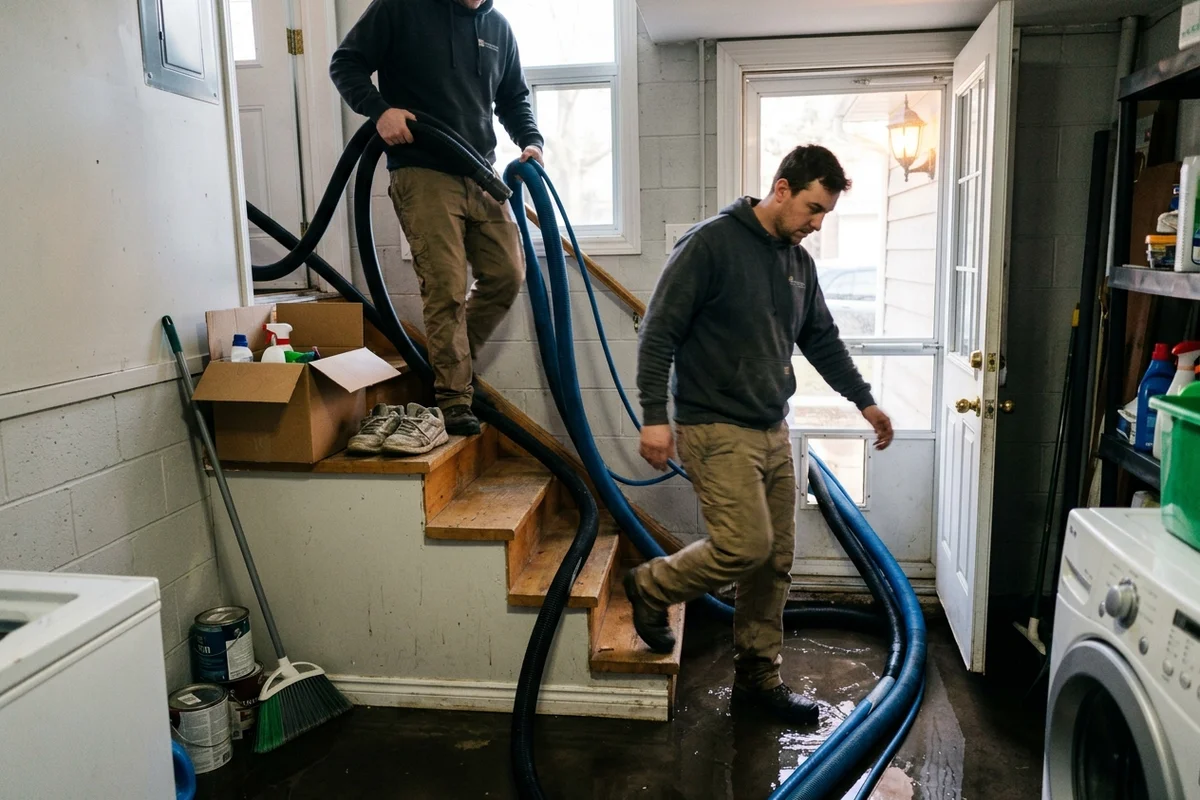
Seeing a fully equipped truck pull into your driveway brings immediate peace of mind. Our crew lead immediately steps in to confirm the area is safe to enter. They locate and isolate the source of the intrusion while photographing every single room before touching anything.

We follow a very specific process to get your property stabilized. This structured approach ensures nothing gets missed during the chaos.

Here is what happens during that initial visit:

  • Water Extraction: Submersible pumps and powerful truck-mounted extraction units remove the bulk of the standing water quickly.
  • Moisture Mapping: Specialized moisture meters track exactly how far the moisture has wicked into your drywall, baseboards, and flooring.
  • Equipment Setup: Industrial-grade drying equipment, like high-velocity air movers and dehumidifiers, gets placed during the very first visit.
  • Clear Documentation: You receive a detailed, written summary outlining what was accomplished, the water category rating, and the necessary next steps.

Our response protocols adapt immediately based on what type of water we find. If hazardous waste is present, the job continues safely under our strict sewage backup cleanup protocol. We transition directly to emergency water extraction and structural drying if the incident involves clean tap water.

Why People Wait Too Long to Call About a Flooded Basement

Hesitation is a natural response when you are facing an unexpected property disaster. We hear the same common concerns from property owners every single week. Delaying mitigation, unfortunately, almost always leads to secondary damage and more expensive repairs down the road.

“I didn’t want to pay for an emergency call if it wasn’t serious.” The required fee is always quoted clearly before dispatch, and it is fully waived when we extract water during that same visit. Our dispatchers will honestly tell you if your situation is safe to wait until morning. A two-minute phone consultation costs absolutely nothing and entirely removes the guesswork from your shoulders.

“I was waiting for the insurance company to call back.” Your provider actually expects you to start the mitigation process right away to prevent further loss. We know that waiting a full day for a returned call allows moisture to wick much higher up the walls. This delay can unfortunately make a portion of your damage look preventable to the adjuster.

“The water stopped rising, so I thought it was over.” The visible puddles often drain back out through the floor grate once a heavy storm passes. Our technicians know that the moisture trapped inside your drywall, carpet padding, and wood framing absolutely does not leave on its own. That hidden dampness creates the perfect environment for harmful mould to start growing within 48 to 72 hours.

“I didn’t know who to call.” Providing clear guidance is the main reason our dedicated dispatch desk exists. We take your single call and immediately tell you the proper order to contact the city, your utility provider, and your insurer. Taking decisive action right now protects your property and makes the entire recovery process smoother.
CAD Field Tariffs // Published Before You Call

What a Flooded Basement Emergency Visit Costs in Toronto, Quoted Before Dispatch

You hear the emergency fee on the phone before a truck leaves. The first-visit scope depends on the water category and how much water is on the floor.

Published Scope Bands

first-visit emergency scope
Emergency Dispatch Fee (waived on same-visit extraction) $250 - $500 CAD
Same-visit extraction Cat 1 $500 - $1,500 CAD
Same-visit extraction Cat 2 $1,500 - $4,000 CAD
Category 3 sewage response (if sewage is present) $2,000 - $10,000 CAD

What Moves the Price

Cost Factors
  • Is sewage involved?

    Floor drain or toilet backup is Category 3 and moves the visit into the $2,000-$10,000 sewage band.

  • How long the water has been there

    Water that sat for a weekend while you were away is treated as a higher category and usually means more tear-out.

  • Power status

    Outages add generator setup but not a separate surcharge when extraction happens the same visit.

  • Depth and area

    A wet laundry corner and a basement with six inches wall to wall are priced in different bands.

Every quote itemises emergency fee, extraction, drying, cleanup, and permanent solution separately. Dispatch fee waived on same-visit extraction. Insurance direct-billing available on covered claims, subject to policy limits and adjuster approval.

Incident Timeline // Protocol Sequence

How Our Emergency Triage Works, From Your First Call to Water Out

Dispatch runs the same five checks on every emergency call. They decide who goes, what goes on the truck and what you should do while you wait.

  1. STEP 01

    Safety questions

    Is water near outlets, the panel, the furnace or gas appliances? Is anyone standing in it? Dispatch tells you what to shut off and what to stay away from.

  2. STEP 02

    Source and category

    Pipe, sump, floor drain, toilet or groundwater. The answer sets the likely IICRC category and the protective gear the crew brings.

  3. STEP 03

    Location and priority

    Your postal code and the category place you in the queue. Category 3 sewage and deep standing water go first.

  4. STEP 04

    Fee quoted, truck assigned

    The emergency fee is quoted before dispatch, and you get an arrival estimate from the crew lead.

  5. STEP 05

    On site: isolate, extract, document

    The crew stops or isolates the source, extracts water, photographs and maps moisture, and sets drying equipment on the same visit.

Dispatch window: 90 minutes across the GTA, 24/7 including holidays

Risk Reversal // Before Any Equipment Goes Down IN WRITING

Flooded Basement Emergency: Price Confirmed Before We Start, Warranty After We Finish

This job is priced inside the published CAD bands above, itemised before equipment goes down, and closes with a written workmanship warranty. Insurance-covered claims are billed directly to your insurer, subject to policy limits and adjuster approval.

Technical Specifications // Protocol Integrity

6 Reasons Panicked Homeowners End Up Calling Us First

18 YRS

18 Years of Basement Flood Response Experience

The dispatch desk has walked thousands of GTA homeowners through their first hour. You get calm, specific instructions, not a sales script.

CAT 3 PRIORITY

Category 3 Goes First

Sewage and deep standing water are prioritised within the 90-minute window.

OWN POWER

Power for Outages

Storms knock out power and sump pumps together. Our crews bring generators and pumps.

NO SURPRISE

Fee Quoted Upfront

The $250-$500 emergency fee is quoted before dispatch and waived on same-visit extraction.

IICRC S500

Documented From Minute One

Photos and readings start before anything moves, which is what your adjuster needs to see.

DIRECT BILL

Insurance Direct-Billing

We bill directly to Aviva, Intact, Definity, Wawanesa, Economical, TD, Belair, subject to your policy limits and adjuster approval.

Verified Case Dossiers // GTA Residences

3 Emergency Calls From the Worst Night of the Year

Melissa J. Riverdale
"I was standing in water not knowing whether to call the city, the insurer or a plumber. Dispatch told me which order, told me to stay off the panel, and had a crew here in 75 minutes."
Andre C. Weston
"Power was out and the sump had stopped. They showed up with their own generator and pumps. First-night emergency scope was $2,400, itemised."
Fiona O. Swansea
"Came home from a week away to a flooded basement. They treated it as Category 3, photographed everything before touching it, and Belair approved the claim in nine days."
FAQ Archive // Operational Guidelines

10 Questions People Ask With Water on the Basement Floor

What should I do first when my basement floods?

Start with safety, then stop the water, then document, then call. If water is near outlets, the electrical panel, the furnace or any gas appliance, do not go down the stairs. If you smell gas, leave the house and call 911 from outside. If it is safe, shut the main water valve for a burst pipe, and keep children and pets away from any water that came up through a floor drain or toilet, because that is sewage. Take wide photos and close-ups of the waterline before you move anything. Then call our dispatch desk at (416) 555-0100. We will tell you whether anything else needs to happen before the crew arrives, quote the emergency fee, and give you an arrival estimate. Call your insurer's claims line as well, but do not wait for them to call back before starting mitigation.

Is it safe to go into my flooded basement?

Not always. The main risks are electrical shock from outlets, cords or appliances in contact with water, gas appliances that may have been affected, and contaminated water from a sewer backup. If the water is above outlet height, touching the panel, or you are unsure, stay out and tell dispatch. If the panel is underwater, contact Toronto Hydro before anyone goes down. Sewage carries bacteria and viruses, so no bare skin contact. Our crew confirms the space is safe before anyone steps in, and uses full PPE for Category 3.

Who should I call first: the city, my insurer or you?

If sewage is coming up through the floor drain during a storm, call 311 Toronto to report it so the city can check the municipal sewer, then call us for dispatch, then your insurer's claims line. If it is a burst pipe or failed appliance, call us and your insurer. The city does not clean up private basements, and your insurer expects you to start mitigation right away, so there is no reason to wait for either before booking a crew.

What if the power is out and my sump pump stopped?

This is one of the most common storm-night calls. Tell dispatch the power is out. Crews carry portable generators and submersible pumps, so we can pump the pit and the floor even while Toronto Hydro restores service. Afterward, a battery backup sump pump is the fix that stops it happening next time.

How much is the emergency call-out fee?

The emergency dispatch fee is $250-$500 CAD, quoted on the phone before the truck leaves. It is waived when we extract water on the same visit, which covers nearly every emergency call.

Do you come out overnight and on holidays?

Yes. Dispatch runs 24/7, 365 days a year, and holiday or overnight calls are dispatched in the same 90-minute window.

What if the water has been sitting for days?

Call anyway. Water that has sat for 48 hours or more is usually treated as a higher category, more material will likely need to come out, and mould may have started. We document the condition as found, which your adjuster needs to see, and start containment if there is growth.

Should I move furniture and pull up carpet myself?

Move valuables, electronics and papers upstairs if it is safe. Leave carpet, pad and drywall in place for now. The adjuster may want them photographed in position, and wet carpet is extremely heavy and easy to hurt yourself lifting.

Will my insurance cover the emergency visit?

Emergency mitigation is usually part of a covered sudden water loss, but coverage depends on your policy, endorsements and deductible. We document under IICRC S500 from the first minute and bill directly to major Ontario insurers, subject to your policy limits and adjuster approval.

How fast can you reach Riverdale, Weston or Swansea?

All three are inside our 90-minute dispatch window. Riverdale and Swansea are among the neighbourhoods we reach most often during summer storms, and Weston calls are frequent during Humber River high-water events.

Question not covered here? Call (416) 555-0100 Send a Message

Dispatch desk open 24/7 across the GTA

Stop Reading. Call Dispatch and Get the Next 10 Minutes Right.

The desk tells you what to shut off, what to photograph and when the crew arrives, and quotes the emergency fee before a truck leaves the yard.

  • Emergency fee quoted upfront
  • Written CAD scope first
  • 1-5 year written warranty

Short Dispatch Intake

DISPATCH ACTIVE

Four fields and the dispatch desk calls you back. Your page is attached so we know which service you were reading about.

Need something non-urgent? Send a Message to our GTA coordination desk.

Call (416) 555-0100 CAD Scope Intake