What Basement Waterproofing Means for a Toronto House
Have you noticed a damp spot on your basement floor after a heavy spring rain?
That sinking feeling is something many property owners share when searching for basement waterproofing Toronto solutions.
We see these recurring spring-thaw and storm leaks in older Toronto foundations all the time, and left alone they are often the first warning of a full basement flood in Toronto. Most of the city sits on Halton Till clay.
This dense soil holds water against the foundation instead of letting it drain away, causing several common structural issues:
- Intense hydrostatic pressure builds against the exterior wall and under the concrete slab.
- Water forces its way through the weakest point, usually the cove joint where the floor meets the wall.
- Original clay weeping tiles shift, crack, and fill with thick silt.
- Every single freeze-thaw cycle opens small gaps a little wider.
These trapped water issues create major problems for older homes built before 1970.
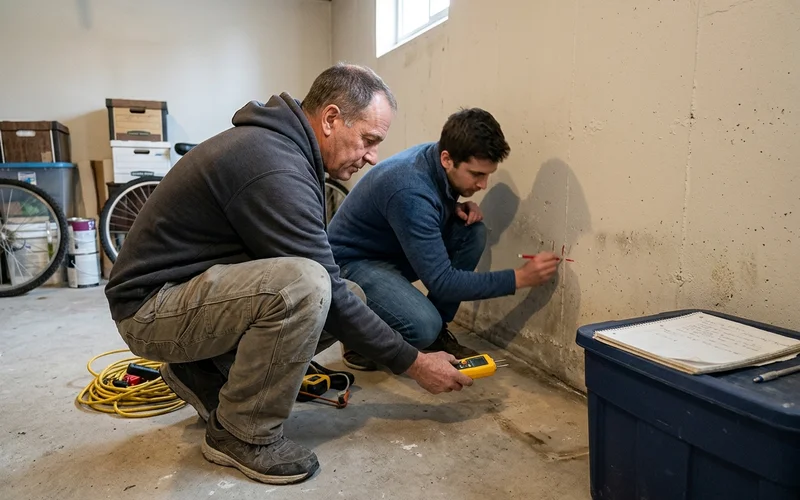
Our technicians diagnose whether the water is hydrostatic or just surface seepage running down the wall from poor grading. Hydrostatic water pushes up directly through the slab and cove joint. A visual inspection helps us recommend the least disruptive permanent fix for your property.
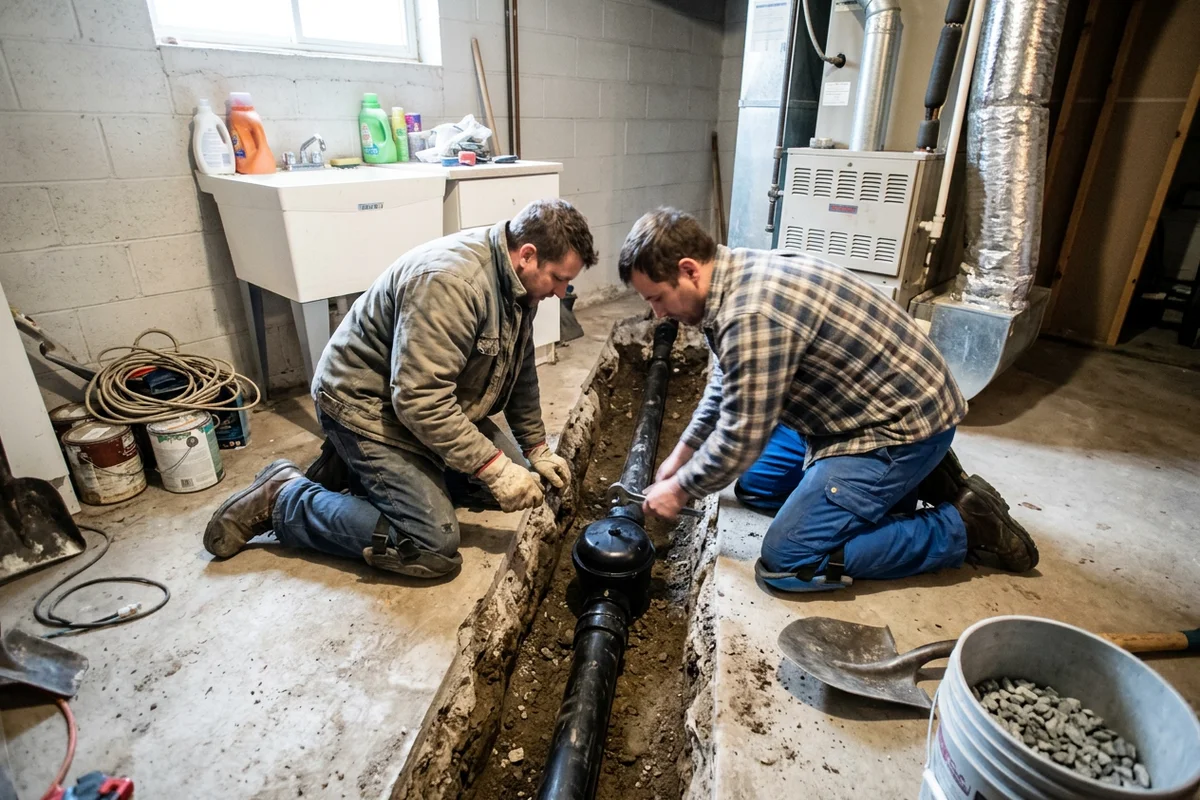
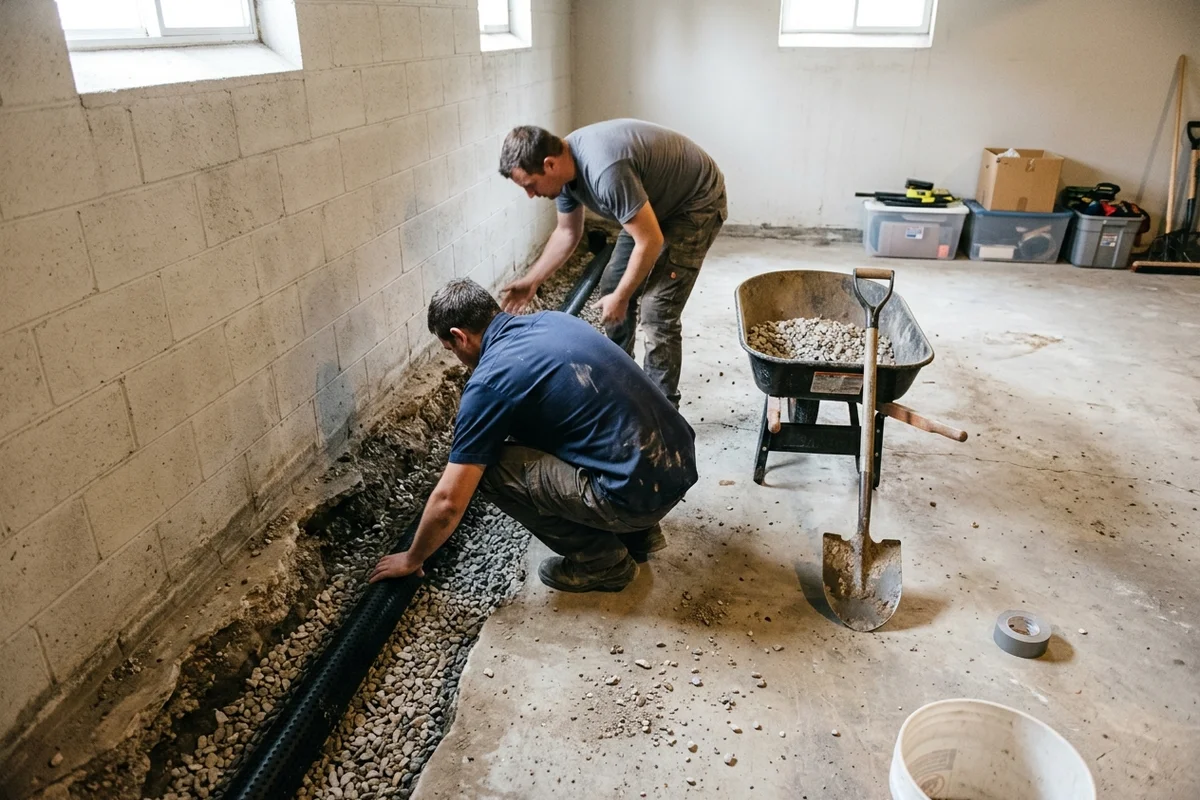
Interior systems cut a perimeter channel, lay a 4-inch perforated pipe in 3/4-inch clear stone, and use a dimple membrane to tie into a new sump pit. Exterior work excavates the foundation, applies a protective Henry Blueskin membrane with drainage board, and rebuilds the perimeter drain wrapped in geotextile filter fabric.
We ensure all work strictly follows Ontario Building Code Part 9. Your final project includes a written workmanship warranty of 1 to 5 years.
5 Signs Your Toronto Basement Needs Waterproofing Before Next Spring
Our team spots these common patterns on assessments across Leaside, East York, High Park, and The Kingsway. One sign on its own is worth watching closely. Two or more issues usually mean the drainage around the footing is failing completely.
We highly recommend checking your lower level for these specific warnings:
- White powder on the walls (efflorescence). Chalky salt deposits on poured concrete or block mean water is moving through the wall and evaporating on the inside face. It is an early warning that often shows up a year or two ahead of visible leaks.
- Water at the cove joint after heavy rain or thaw. A damp line where the floor meets the wall is the classic sign of hydrostatic pressure. You will usually see it show up on the exact same wall every single year.
- Sump pump running in dry weather. If your heavy-duty pump cycles days after the last rain, the water table around the house is high. The weeping tile might also be feeding it groundwater constantly.
- Musty smell and stained baseboards. Basement humidity that sits above 60 percent grows mold behind drywall long before you see a puddle. Stains at the very bottom of the drywall are often the first visible clue.
- Step cracks or damp patches that grow each spring. Stair-step cracks in block walls show the soil is pushing on the foundation. Patchy damp spots that spread after each freeze-thaw cycle indicate water is finding a clear path inside.
Field note: A dehumidifier can hide signs 1 and 4 for a while. It does not fix the water getting in. If you are emptying the bucket daily in April, the wall is trying to tell you something.
Interior vs Exterior Waterproofing: 4 Questions to Ask
We know that both interior and exterior methods work exceptionally well. They simply solve the problem at different points of entry. The right choice depends entirely on the specific layout and condition of the house.
Our experts use these four questions to settle the debate in most cases:
| Question | Points toward interior | Points toward exterior |
|---|---|---|
| Where does the water appear? | At the cove joint and floor | High on the wall or through the block itself |
| What is the wall made of and how is it holding up? | Sound poured concrete | Deteriorating block, parging failing, soft mortar |
| How much access is there outside? | Shared driveway, deck, tight side yard | Clear access on the leaking sides |
| What is the budget? | $3,000-$8,000 CAD | $10,000-$25,000 CAD |
1. Where is the water coming in? If water shows at the base of the wall and the floor, an interior weeping tile catches it exactly where it arrives. Water running down the wall from above strongly points to an exterior membrane failure or poor surface grading.
2. What shape is the foundation in? We find that a sound poured wall with water at the footing is an ideal interior candidate. Old cinder block walls that stay damp through their full height need a completely different approach. Stopping the water outside benefits these deteriorating structures immensely.
3. Can we get to the outside? Our crews often see leaking walls sitting under a shared driveway or a neighbour’s walkway on Toronto semis. An interior system is then often the only practical option. Digging outside requires enough clearance for heavy machinery and safe excavation.
4. How long are you staying? We consider exterior waterproofing to be the most permanent fix available. An interior setup is very effective and generally costs a third as much. If you plan to sell in two years, a sound interior system with a transferable warranty is usually the better spend.
Types of Basement Waterproofing We Install
Our crews customize the installation to match your exact structural needs. The right materials make a massive difference in long-term performance. Quality installation prevents the headache of recurring property damage.
Here is a breakdown of the specific systems available:
Interior weeping tile with sump pit
We cut a 12-inch channel around the inside perimeter and dig straight down to the footing. This trench is carefully lined with clear stone and premium perforated pipe.
A dimple membrane on the lower wall directs any seepage straight into the new channel. Our team routes the system to drain into a brand new sump pit.
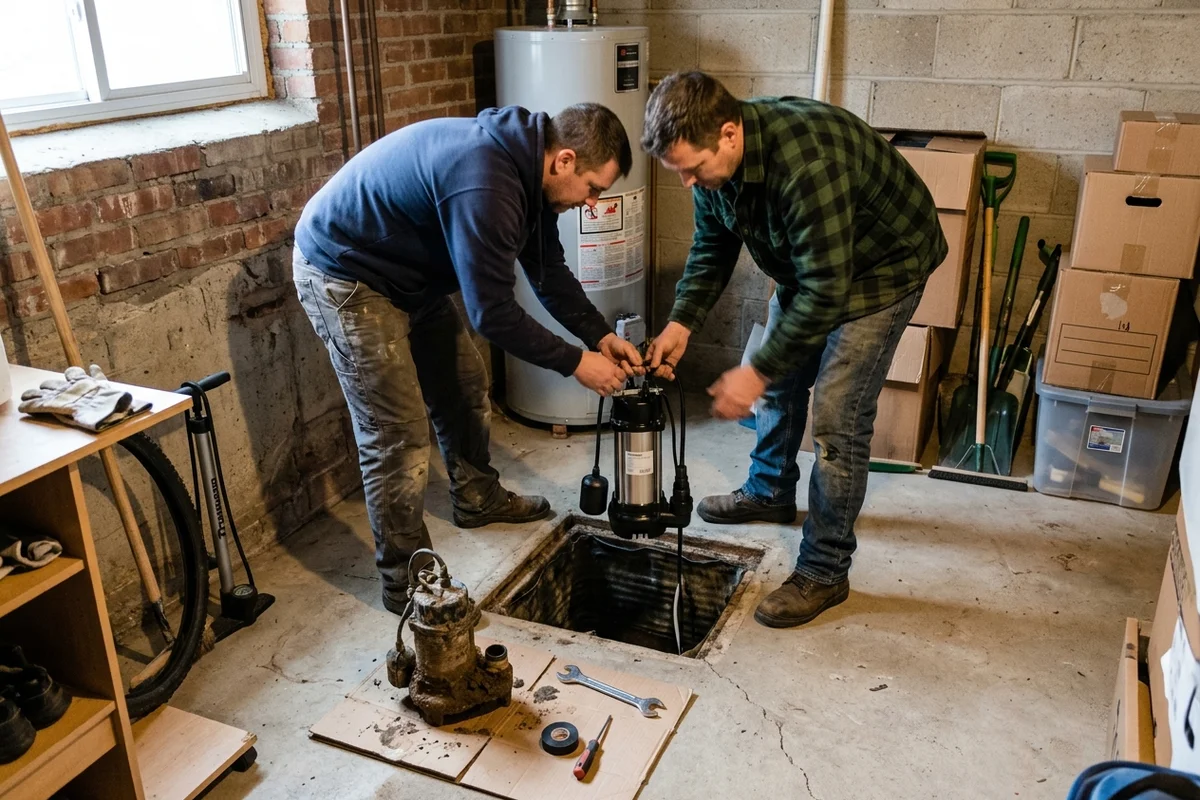
This pit includes a heavy-duty submersible pump and a discharge line routed safely away from the house. On City of Toronto properties, the new sump pump can qualify for the flood protection subsidy.
Exterior excavation, membrane and drainage board
We dig directly down to the footing on the specific sides that are leaking. The exposed concrete wall is thoroughly cleaned and prepped for repair.
A highly durable, self-adhered membrane goes on next, followed by a sturdy drainage board. Our technicians then lay a new perimeter drain wrapped securely in filter fabric.
Backfill is carefully compacted in small lifts to prevent future settling. Correcting the final surface grading ensures rainwater runs safely away from the foundation walls.
Foundation parging and sealant
We recommend this specific fix most often to owners who expected a massive full dig. Sometimes the wall is totally sound, but the outside cement coating has cracked over time.
This simple wear and tear lets surface water seep right in during a storm.
Our contractors apply fresh parging and a tough sealant, which usually costs $2,000-$5,000 CAD and can be enough to stop the leak entirely.
Interior crack injection
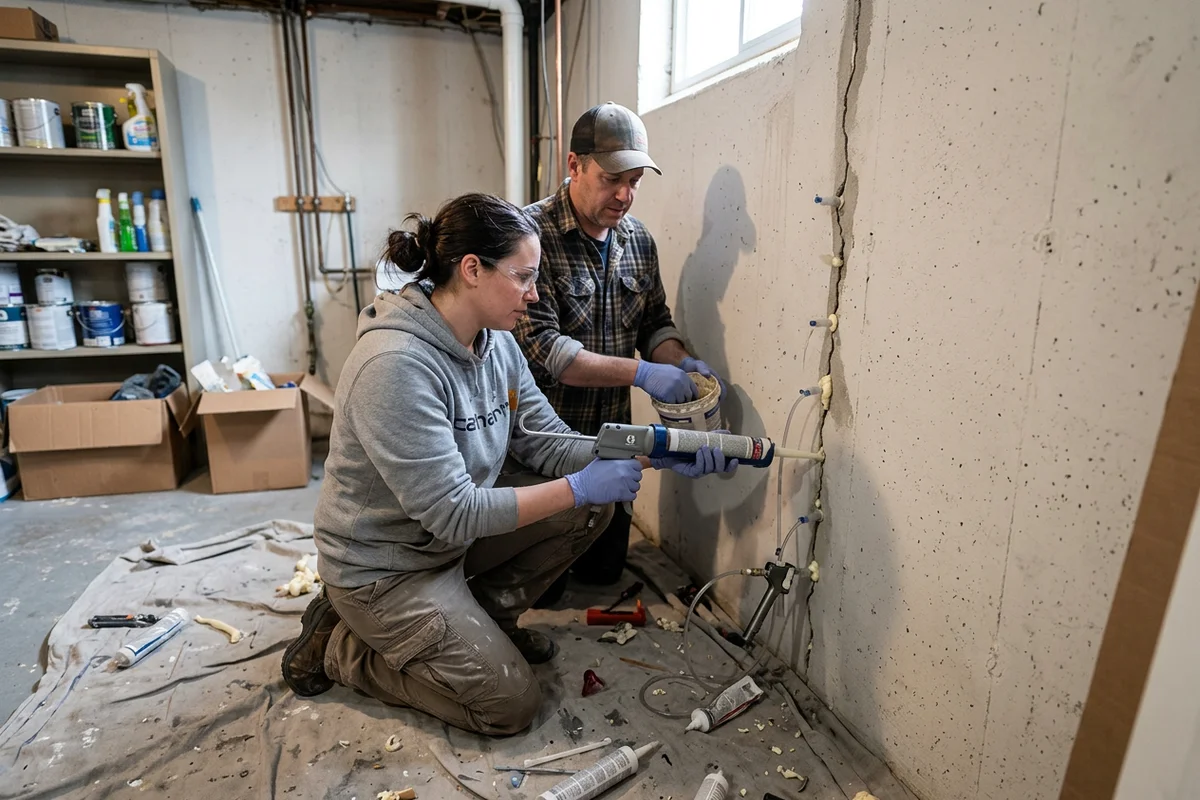
Hydrophobic polyurethane injection works perfectly for one or two leaking cracks in an otherwise dry poured wall. We apply this expanding foam from the inside to quickly seal the gap against future moisture.
The repair process is fast, clean, and requires absolutely zero digging.
See our foundation crack repair page for a detailed look at exactly how that works.
When Waterproofing Is Not the Answer
We always verify the actual source of the moisture before quoting a big foundation job. Some basement water has absolutely nothing to do with the concrete walls. Plumbing disasters and storm surges require completely different mechanical solutions.
Here are a few scenarios where structural waterproofing will not fix the issue:
- Sewer Surcharge: Sewage coming up through the floor drain during a massive storm requires a backwater valve.
- Appliance Leaks: A puddle that only appears when the laundry machine runs is clearly a plumbing failure.
- Mechanical Failure: Water pooling immediately after a power outage is often just a failed pump rather than a failing wall.
We test the entire sump pump system thoroughly before recommending a new drainage layout. If your lower level is already flooded from a recent weather event, the very first step is different.
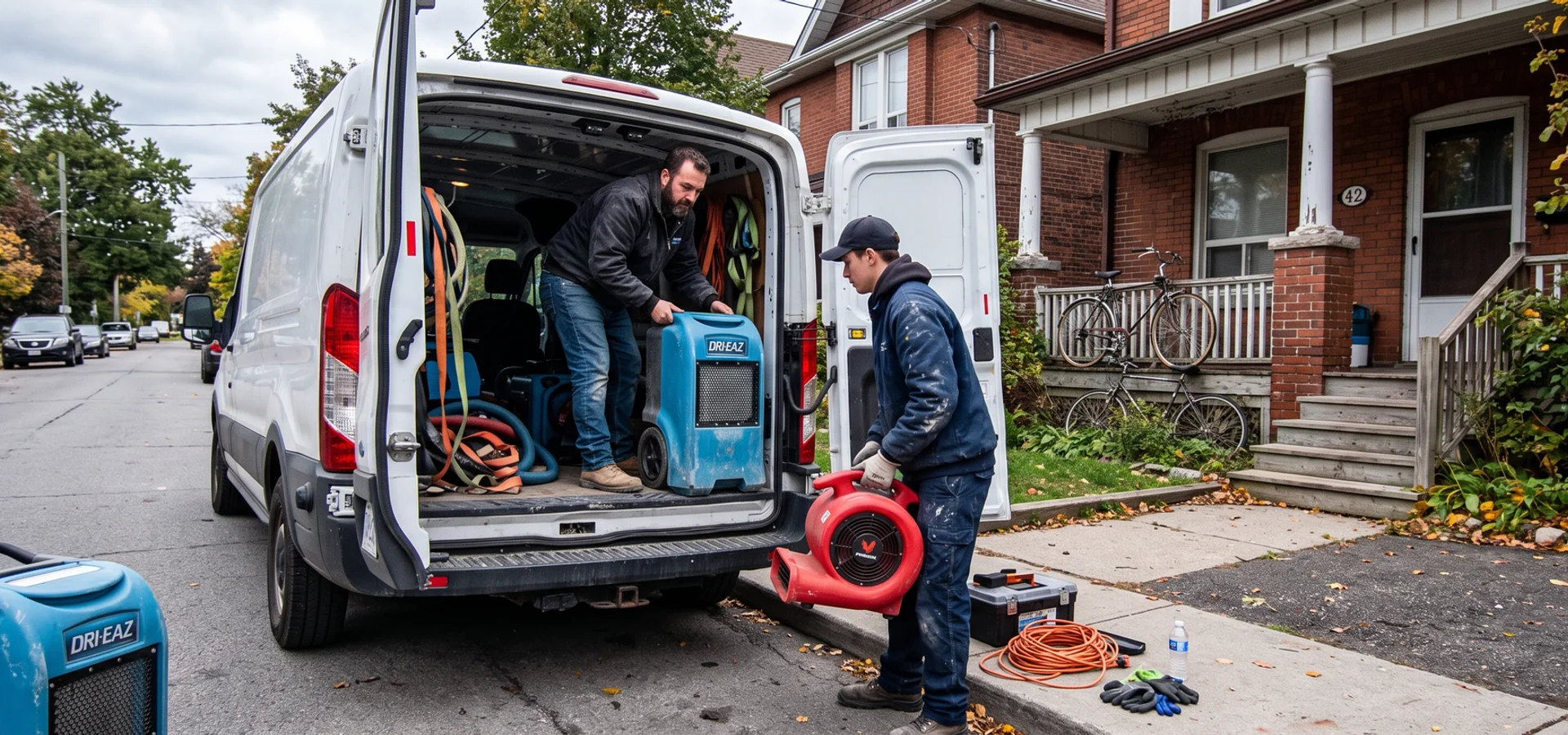
A specialized crew must handle emergency water extraction before anything else happens. Our process dictates that permanent structural waterproofing always comes after the space is completely dry.
Why Toronto Homeowners Put Off Waterproofing, and What We Tell Them
We hear the exact same hesitations from property owners every single week. Delaying the repair usually creates a much bigger mess down the road.
Clear answers help make the final decision process far less stressful.
- “It only leaks a little in the spring.” In our opinion, this is the most expensive sentence in basement repair. A small spring leak keeps drywall bottoms and carpet wet for weeks. That is exactly the dark, damp condition toxic mold needs to thrive. The waterproofing bill does not grow much over two years, but the finished-basement repair bill absolutely does.
- “I got a quote for $25,000 and nearly fainted.” We find that massive quotes are usually for full exterior excavation jobs. Many basements simply do not need a full exterior dig. Our team will show you the exact moisture readings that support a cheaper interior system, a partial treatment, or simple parging if that is what the house truly needs.
- “The company will want to dig up my whole yard.” Interior systems keep your expensive landscaping completely untouched. When exterior work is the right call, we quote the landscape and hardscape reinstatement as a separate line item. You will know exactly what the yard will look like after the heavy equipment leaves.
- “I’m not sure it will actually work.” We provide a written warranty of up to 5 years for total peace of mind. You also get clear photos of every buried component before the trench is closed. A final pump test with live water happens before the crew leaves the site. If the house needs something different next spring, the warranty completely covers the workmanship for your basement waterproofing Toronto project.