Emergency Operations: 24/7 GTA Dispatch
(416) 555-0100

Priority Hub // Category 3 Prioritised

Basement Flood Toronto: Sewage Backup Cleanup Toronto, IICRC Category 3 Extraction, Tear-Out and Disinfection for GTA Basements

By The Basement Flood Toronto Crew

Sewage backup cleanup in Toronto is IICRC S500 Category 3 remediation of raw sewage that has entered a basement through a floor drain or toilet: extraction, removal of porous materials that touched the water, disinfection and HEPA air scrubbing, priced $2,000-$10,000 CAD and prioritised within 90 minutes.

Sewage in the basement is a health problem before it is a property problem. We contain it, remove everything porous that it touched, disinfect what can be saved, and hand your adjuster a contents log and photo record that leaves nothing to argue about.

  • 18 Years GTA Basement Flood Response
  • IICRC WRT, ASD, AMRT, CDS Certified
  • 24/7 Dispatch, 90-Minute Response
  • Insurance Direct-Billing, Subject to Policy Limits
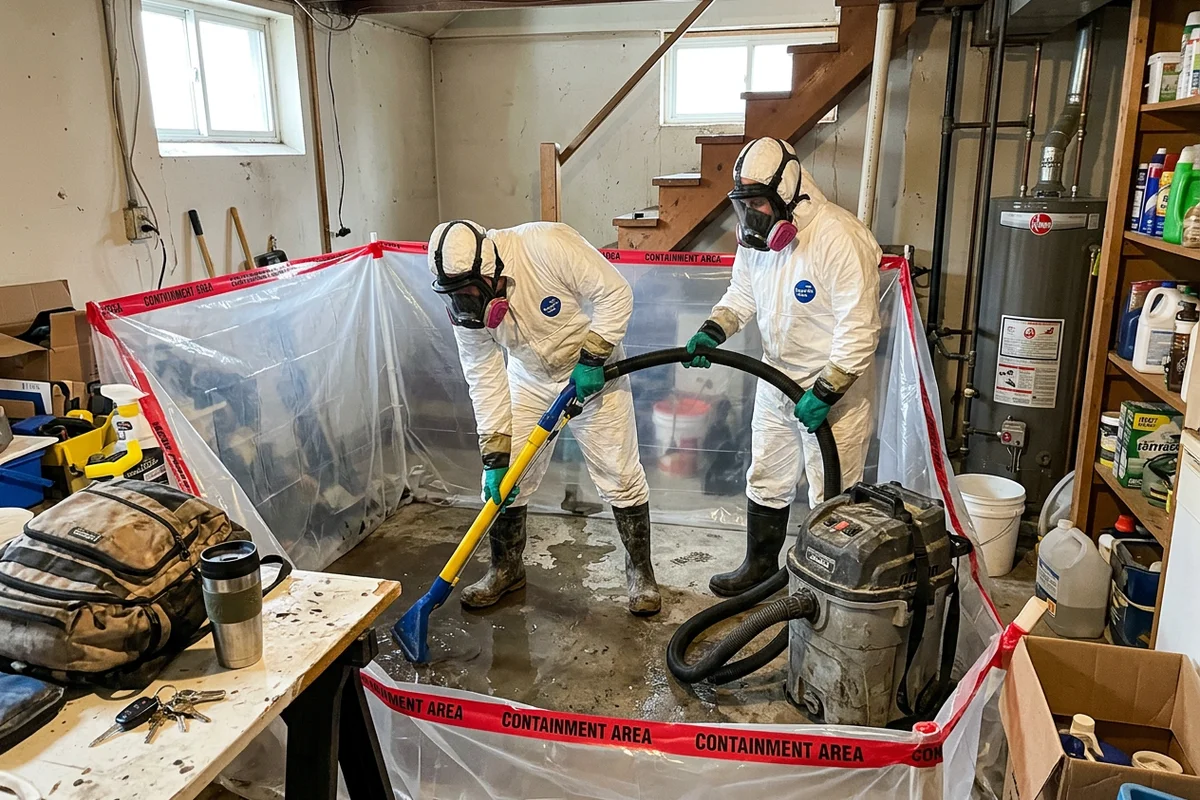
Two technicians in full PPE extracting sewage from a basement floor inside poly containment
Published Range // Sewage Backup Cleanup CAD

From

$2,000 CAD

per Category 3 scope

Full bands
  • 18 Years of Basement Flood Response
  • IICRC WRT, ASD, AMRT, CDS Certified
  • 24/7 Dispatch, 90-Minute Response
  • Insurance Direct-Billing
  • 5-Star Customer Satisfaction
  • WSIB + $5M Pollution Liability

What Sewage Backup Cleanup Involves

Finding water on the basement floor is stressful enough. When that water brings contamination with it, it is the most urgent kind of basement flood in Toronto there is. Dealing with Category 3 water, often called black water, requires immediate action to keep your property safe.

Our team specializes in sewage backup cleanup in Toronto, following strict protocols to restore your home. Immediate sorting of materials is crucial for a successful restoration. We handle contaminated areas based on very specific guidelines:

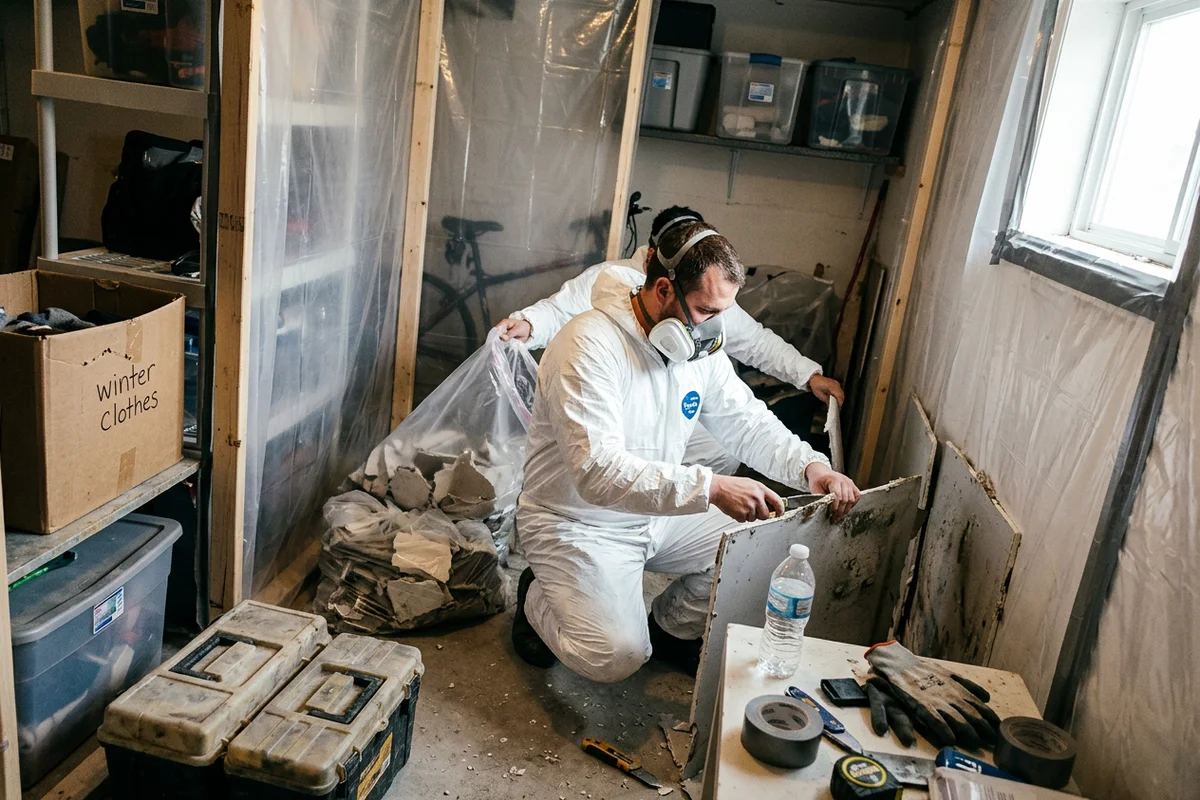
  • Porous items: Affected drywall, insulation, carpet, and underpad must be completely removed. Our crews safely extract these materials to stop contamination in its tracks.
  • Solid surfaces: Materials like concrete, tile, and sealed hardwood are thoroughly cleaned instead. Professional disinfection treatments are applied directly to these hard surfaces to eliminate harmful bacteria.

Our lead field technician, Marco Andriolo, runs every Category 3 response to ensure total safety. He sets up containment areas and negative air machines to protect the rest of your building. We extract the standing water, make controlled flood cuts, and dry everything to an exact standard.

Detailed documentation is created for your adjuster, including a complete contents triage log. Our process closely follows the strict IICRC S500 Category 3 protocol for your peace of mind. Sewage carries dangerous pathogens like E. coli, norovirus, and endotoxins.

We strictly follow these rules because those contaminants soak deep into porous materials where normal surface cleaners simply cannot reach them.
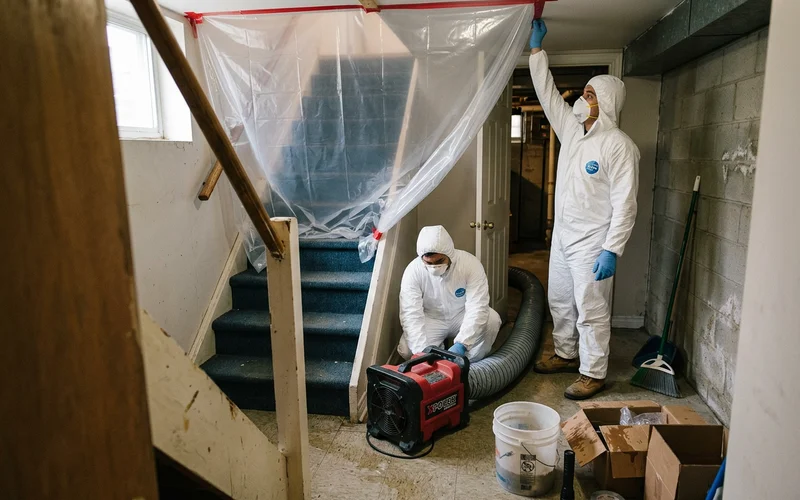
Two technicians in PPE setting up a negative air machine and poly containment at the entrance to a sewage-affected Toronto basement

IICRC Category 3 Cleanup Protocol Explained in 7 Steps

Following the right steps makes all the difference in achieving a safe home environment. We approach every single job using this proven seven-step method.

  1. Safety and PPE. Crews wear respirators, gloves, boots, and disposable coveralls. We always confirm the power to the affected area is completely safe before stepping inside.
  2. Containment and negative air. Poly sheeting completely seals the basement from the rest of your house. We use a negative air machine to exhaust air outside so contaminated air does not travel upstairs.
  3. Extraction. Standing sewage is pumped and extracted with dedicated equipment. Our team cleans and disinfects these machines after every single Category 3 job.
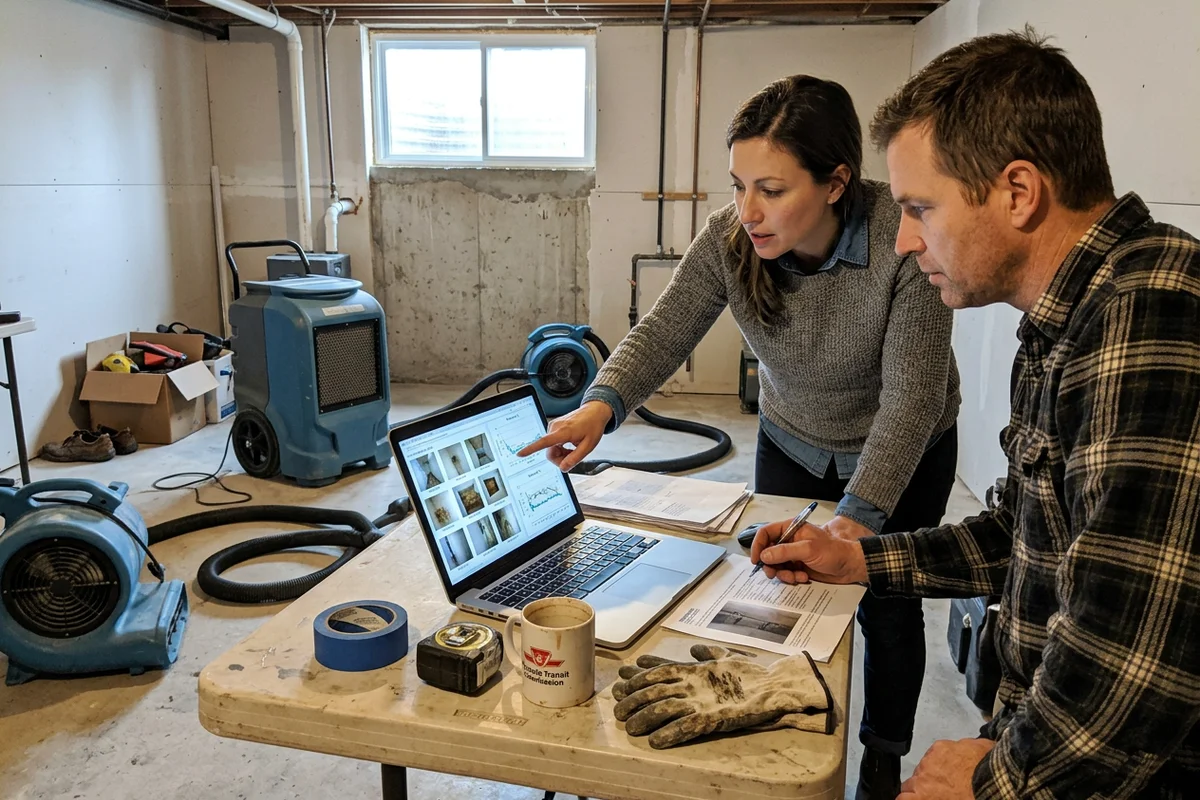
  4. Documentation and contents triage. Every item and surface is carefully photographed before any removal begins. We sort your contents clearly into cleaned, restorable, and non-salvageable categories.
  5. Controlled removal. A standard 2-foot flood cut removes contaminated drywall and insulation. We cut higher if the wicking traveled further up the wall, and bag all affected carpet, pad, and subfloor securely.
  6. Cleaning and disinfection. Remaining surfaces are thoroughly HEPA-vacuumed and scrubbed with a registered antimicrobial like a quaternary ammonium antimicrobial. We apply a gentle botanical product like Benefect Decon 30 where a softer option suits the household better.
  7. Drying and air scrubbing. LGR dehumidifiers and air movers dry the structure while a HEPA air scrubber cleans the air. Our moisture readings continue daily until the strict dry standard is officially met.

Field note: A disappearing smell is not actual proof the job is done. We absolutely never remove our equipment based on smell alone. The true test relies on hitting the dry standard and verifying a clean, disinfected structure.

Why Toronto Basements Back Up

Many older Toronto neighbourhoods rely heavily on a combined sewer system. Our crews often see how this single pipe carries both stormwater and household sewage. During an intense storm, that pipe fills up much faster than it can actually drain.

We know the system quickly surcharges, forcing sewage to flow backward up your sanitary lateral. The dirty water eventually finds the lowest opening in your house, which is usually the basement floor drain. Our community experienced this heavily during the July 8 2013 storm, causing about $850M in damage.

The August 2018 flooding around Rockcliffe-Smythe also followed this exact same destructive pattern. We frequently find that private laterals blocked by tree roots can cause backups on dry days too. Collapsed clay pipes create similar drainage nightmares for local property owners.

Our top recommendation for a long-term fix is a professional backwater valve installation. Sometimes the backup goes unnoticed for a while, allowing nasty mould growth to start spreading. We then continue the required cleanup as full mould remediation under safe containment.

Insurance and Sewer Backup

Standard home policies often exclude sewer backup unless you specifically carry a sewer backup endorsement. Our experience shows this endorsement usually has its own sub-limit and sometimes its own deductible. Approval always depends completely on your specific provider and policy details.

We start documenting the loss from the very first photograph to help your case. Direct billing is available to major insurers like Aviva, Intact, Definity, Wawanesa, Economical, TD, and Belair. Our process remains subject to your specific policy limits and final adjuster approval.

Detailed records make the whole approval conversation much smoother. We invite you to review our insurance claim assistance page, which perfectly explains the file we build.

Why Homeowners Try to Clean Sewage Themselves, and Why We Advise Against It

Handling a dirty spill might seem manageable at first glance. Our experts hear several common reasons why property owners try to tackle the mess alone. Here is why taking on Category 3 water is incredibly risky.

“It was only a little bit around the drain.” Small backups can certainly look like very small jobs. We believe the size of the puddle is not the issue, but rather the highly toxic category. Even a very thin film of sewage quickly soaks deep into your carpet pad and the bottom of your drywall.

Our team knows that porous layer is exactly where harmful bacteria decide to stay and multiply. Honest quotes are provided for these small drain-side backups, often landing near the very bottom of the pricing band. We are always fully transparent about costs before starting any cleanup.

“Bleach and a mop should do it.” Bleach simply does not penetrate porous materials well enough to work. Our crews know that organic matter quickly uses up any active chlorine in the bleach. Pouring these chemicals also creates overwhelming fumes inside a closed basement environment.

We strongly advise against using bleach because it is simply the wrong tool for Category 3 contamination.

“I don’t want strangers throwing out my things.” Nothing is ever thrown away without being carefully photographed and logged first. Our technicians clean and return anything hard and non-porous to you safely. You get to see the entire sorting process clearly before any final disposal happens.

We ensure you stay completely informed every single step of the way.

“I’m worried the insurer will say I waited too long.” That exact worry is a very good reason to call for professional help right now. Our detailed documentation of the loss as found provides a helpful timestamp. This immediate visual evidence is the strongest thing you can possibly give a busy adjuster.

We are ready to step in and fix this messy situation safely.
CAD Field Tariffs // Published Before You Call

Sewage Backup Cleanup Cost in Toronto: Category 3 Scopes in CAD

Category 3 work is priced by affected area, how much porous material has to come out, and how long the sewage sat. Small drain-side backups sit at the bottom of the band. Whole finished basements sit near the top.

Published Scope Bands

per Category 3 scope
Sewage Backup Cleanup Cat 3 (IICRC S500) $2,000 - $10,000 CAD
Structural Drying after cleanup (3-5 days) $1,500 - $5,000 CAD
Emergency Dispatch Fee (waived on same-visit extraction) $250 - $500 CAD
Post-Remediation Air Quality Verification (optional) $400 - $900 CAD

What Moves the Price

Cost Factors
  • Affected area

    A 150 sqft backup around the floor drain can be a one-day job near $2,000. A full finished basement is a multi-day scope.

  • Porous materials touched

    Carpet, underpad, drywall, insulation and sometimes subfloor come out. More finished area means more removal and disposal.

  • Time before cleanup

    Sewage left for days soaks deeper into framing and raises mould risk, which can add remediation lines.

  • Contents volume

    Contents triage, photo inventory and disposal of non-salvageable items scale with what was stored in the basement.

  • Drying afterward

    Structural drying ($1,500-$5,000) follows cleanup and is priced on its own line.

Every quote itemises emergency fee, extraction, drying, cleanup, and permanent solution separately. Dispatch fee waived on same-visit extraction. Insurance direct-billing available on covered claims, subject to policy limits and adjuster approval.

Incident Timeline // Protocol Sequence

How We Decide What Stays and What Goes After a Sewage Backup

Every item in a sewage-affected basement falls into one of three groups. This is the decision sequence we use, and it is the one your adjuster will expect to see in the file.

  1. STEP 01

    Photograph before touching

    Every room, waterline and item is photographed in place. This record protects your claim and is impossible to recreate later.

  2. STEP 02

    Sort by material type

    Porous (carpet, pad, drywall, insulation, upholstered furniture, cardboard) is removed. Semi-porous (unsealed wood) is assessed. Non-porous (concrete, tile, metal, sealed hardwood, glass) is cleaned.

  3. STEP 03

    Check contact and height

    Materials that touched sewage or sat below the wicking line go. Items stored on high shelves that stayed dry are cleaned and kept.

  4. STEP 04

    Log and dispose

    Non-salvageable contents go on the inventory with photos before disposal, so the adjuster can value them.

  5. STEP 05

    Clean, disinfect and verify

    Remaining surfaces are HEPA-vacuumed, scrubbed and treated with antimicrobial, then dried to the dry standard.

Typical timeline: cleanup 1-4 days, drying 3-5 days after

Risk Reversal // Before Any Equipment Goes Down IN WRITING

Sewage Backup Cleanup: Price Confirmed Before We Start, Warranty After We Finish

This job is priced inside the published CAD bands above, itemised before equipment goes down, and closes with a written workmanship warranty. Insurance-covered claims are billed directly to your insurer, subject to policy limits and adjuster approval.

Field Terminal // Self-Serve Estimator FREE

Try Our Free Basement Flood Cleanup Cost Estimator

Estimate a CAD range for extraction, cleanup and drying based on water category, affected area and drying days.

Open Calculator
Technical Specifications // Protocol Integrity

6 Reasons Toronto Families Trust Us With Category 3 Sewage

18 YRS

18 Years of Basement Flood Response Experience

Eighteen years of sewage calls in the neighbourhoods that back up most, from Rockcliffe-Smythe to Long Branch.

22 YRS LEAD

Lead Tech on Every Cat 3

Marco Andriolo, our lead field technician with 22 years in the trade, runs every Category 3 sewage response personally.

NEGATIVE AIR

Containment First

Poly containment and negative air go up before tear-out, so contamination does not spread to the rest of the house.

$5M

$5M Pollution Liability

Category 3 work is covered by $5M pollution liability on top of $2M commercial general liability.

FULL LOG

Contents Log for the Adjuster

Photo inventory of everything removed, sorted into cleaned, restorable and non-salvageable.

DIRECT BILL

Direct Billing

We bill directly to Aviva, Intact, Definity, Wawanesa, Economical, TD, Belair, subject to your policy limits and adjuster approval.

Verified Case Dossiers // GTA Residences

3 Sewage Backups Cleaned Up Across Toronto

Hassan A. Rockcliffe-Smythe
"Third sewer backup on our block in five years. Full Category 3 protocol, two-foot flood cut, antimicrobial and air scrubbers. $7,600 and Aviva covered it under our sewer backup endorsement."
Monica W. Black Creek
"They told us which contents could be cleaned and which had to go, and built the photo inventory for the adjuster. Cleanup took four days."
Greg E. Mount Dennis
"Small backup around the floor drain, under 150 sqft. Honest quote of $2,300, done in one day, and they explained why bleach alone would not have been enough."
FAQ Archive // Operational Guidelines

11 Sewage Backup Questions Toronto Homeowners Ask

Is my drywall salvageable after a sewage backup?

No. Under IICRC S500, Category 3 (black water) requires removal of porous material that touched the water: drywall, insulation, carpet, underpad and often the subfloor. Drywall wicks sewage upward well above the visible waterline, so we make a controlled flood cut, usually two feet above the highest contamination point, and remove everything below it along with the insulation behind it. The reason is simple: porous materials absorb bacteria and viruses into their core, where surface cleaning cannot reach. Solid surfaces are different. Concrete, tile, metal, glass and sealed hardwood can be cleaned and disinfected and stay in place. The framing studs are usually kept, cleaned, treated with antimicrobial and dried to standard before the rebuild.

Is a sewage backup dangerous to my family?

It can be. Raw sewage carries bacteria such as E. coli, viruses such as norovirus, and endotoxins that irritate the lungs. The risk rises for children, older adults, pregnant family members and anyone with asthma or a weakened immune system. Keep everyone and pets out of the basement, do not touch the water or wet materials without gloves and boots, and do not run the furnace fan if the return air is in the affected area. Our crew works in full PPE and sets containment and negative air so contaminated air is pulled outside rather than into the rest of the house. After cleanup and disinfection, the basement is safe to use again.

How much does sewage cleanup cost in Toronto?

Category 3 sewage cleanup runs $2,000-$10,000 CAD under IICRC S500. A small backup under about 150 sqft around the floor drain is often done in a day near the bottom of that band. A full finished basement with carpet, drywall and stored contents can reach the top of it. Structural drying afterward is $1,500-$5,000 for a typical 3-5 day cycle, and the $250-$500 dispatch fee is waived on same-visit extraction. Every line is itemised on the written scope before work starts.

Will insurance cover sewage backup cleanup?

Usually only if your policy has a sewer backup endorsement, and it may carry its own sub-limit and deductible. Standard home policies often exclude sewer backup without it. Check your policy or ask your broker, and never assume either way. We document the loss under IICRC S500 with category, readings, photos and a contents inventory, and we bill directly to Aviva, Intact, Definity, Wawanesa, Economical, TD and Belair on covered scope, subject to your policy limits and adjuster approval.

Why did sewage come up through my floor drain?

In most older Toronto neighbourhoods the floor drain connects to the sanitary lateral, which runs to the city sewer. In heavy storms, combined sewers fill with both stormwater and sewage and surcharge, meaning the pressure pushes flow backward up the lateral. The lowest opening in the house, usually the floor drain, is where it comes out. Blockages in your own lateral from roots or collapsed pipe can do the same thing even without a storm.

How long does Category 3 cleanup take?

Most sewage cleanups take 1 to 4 days, followed by 3 to 5 days of structural drying. Small drain-side backups are often cleaned in a single day. Whole finished basements with heavy contents take longer.

Can I stay in the house during cleanup?

In most cases, yes. Containment and negative air keep contaminated air in the basement and vented outside. We recommend keeping vulnerable family members away from the basement stairs and closing the basement door until disinfection is complete.

Can I clean it myself with bleach?

We advise against it. Bleach does not penetrate porous materials, is inactivated by organic matter, and does nothing about the sewage already inside drywall and carpet pad. DIY cleanup also exposes you directly to Category 3 contaminants and can weaken your insurance claim because the loss is no longer documented as found.

How do I stop it happening again?

A mainline backwater valve on your sanitary lateral closes when flow reverses, which stops city sewer surcharge from reaching your floor drain. On City of Toronto properties it can qualify for up to $1,700 CAD under the Basement Flooding Protection Subsidy Program.

What happens to my stored belongings?

Each item is photographed and sorted into clean, restorable or non-salvageable. Hard, non-porous items are cleaned and disinfected. Soft goods and paper that touched sewage are logged for your adjuster and disposed of safely.

Do you respond to repeat backups in Rockcliffe-Smythe and Black Creek?

Yes. Rockcliffe-Smythe and Black Creek are two of the areas we are called to most after heavy storms. We cleaned up 47 semi-detached homes on the Rockcliffe-Smythe blocks after the August 2018 event.

Question not covered here? Call (416) 555-0100 Send a Message

Dispatch desk open 24/7 across the GTA

Sewage in the Basement? Keep Everyone Upstairs and Call.

Category 3 calls are prioritised in the 90-minute window. The crew arrives in full PPE, sets containment and starts the contents log your adjuster will want.

  • Emergency fee quoted upfront
  • Written CAD scope first
  • 1-5 year written warranty

Short Dispatch Intake

DISPATCH ACTIVE

Four fields and the dispatch desk calls you back. Your page is attached so we know which service you were reading about.

Need something non-urgent? Send a Message to our GTA coordination desk.

Call (416) 555-0100 CAD Scope Intake