Emergency Operations: 24/7 GTA Dispatch
(416) 555-0100

Full Value Chain // Mitigation Through Rebuild

Basement Flood Toronto: Water Damage Restoration Toronto, From Extraction and Drying to Cleanup and Rebuild Under One Crew

By The Basement Flood Toronto Crew

Water damage restoration in Toronto is the full value chain after a basement water event: emergency extraction, IICRC ASD structural drying, cleanup and antimicrobial, then reconstruction, handled by one IICRC WRT-certified crew with most insurance-covered scopes landing between $3,500 and $15,000 CAD.

A basement water event is not one job, it is five. When a different company handles each stage, gaps open between them: drying stops before the rebuild crew is booked, readings go missing, and the adjuster asks questions no one can answer. We run the whole chain with one crew and one file.

  • 18 Years GTA Basement Flood Response
  • IICRC WRT, ASD, AMRT, CDS Certified
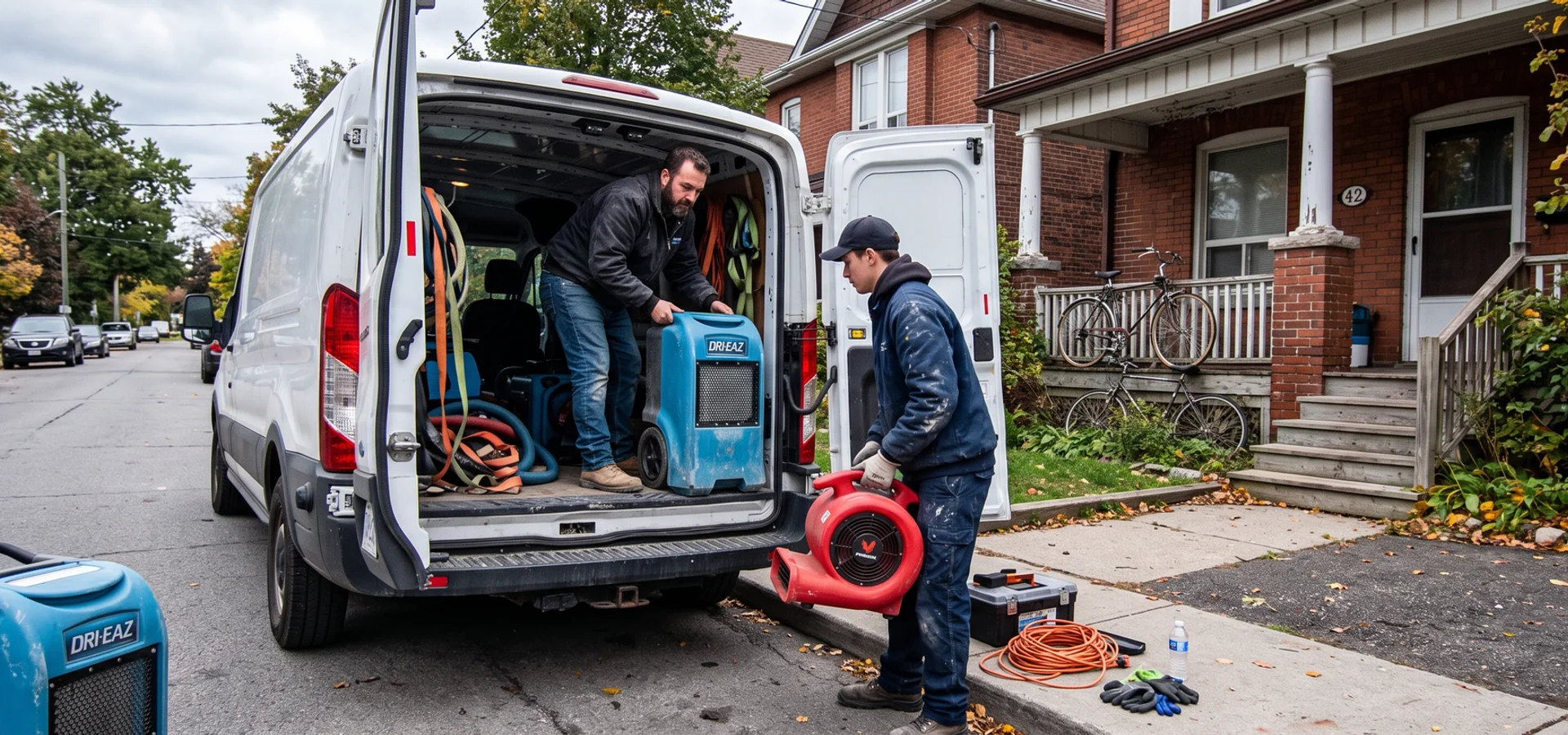
  • 24/7 Dispatch, 90-Minute Response
  • Insurance Direct-Billing, Subject to Policy Limits
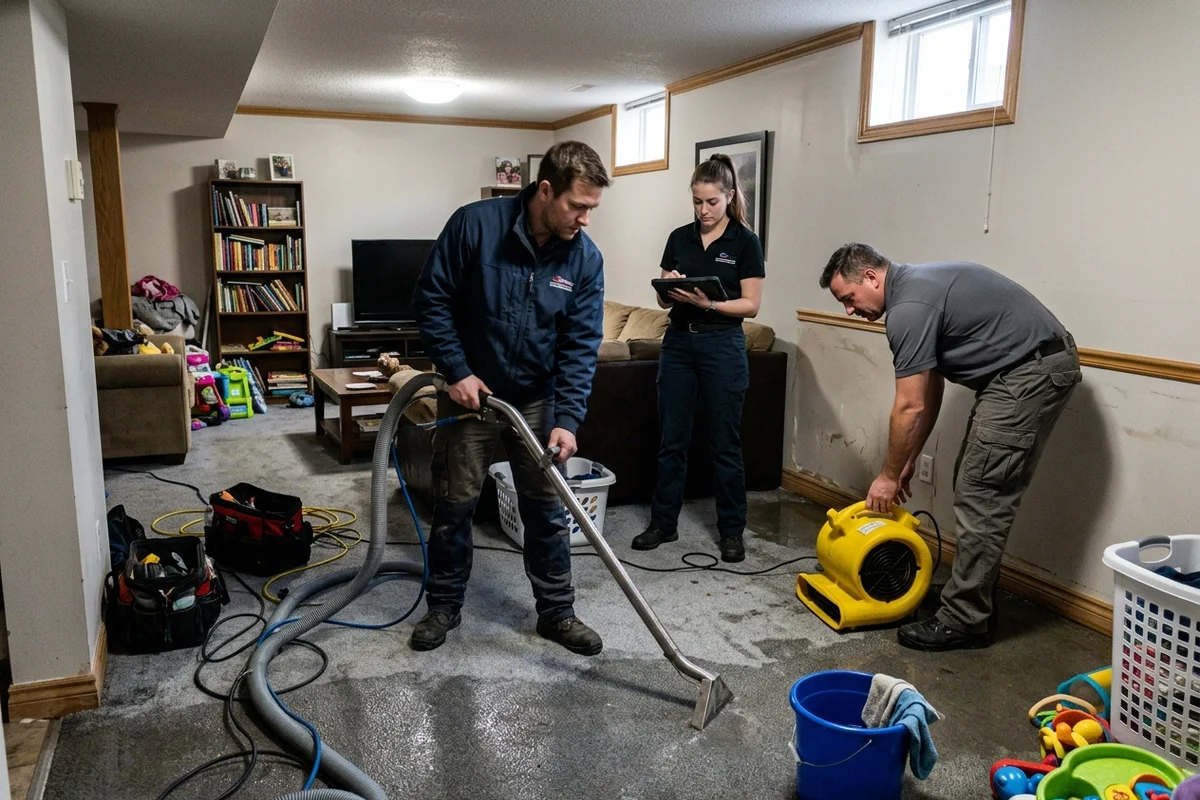
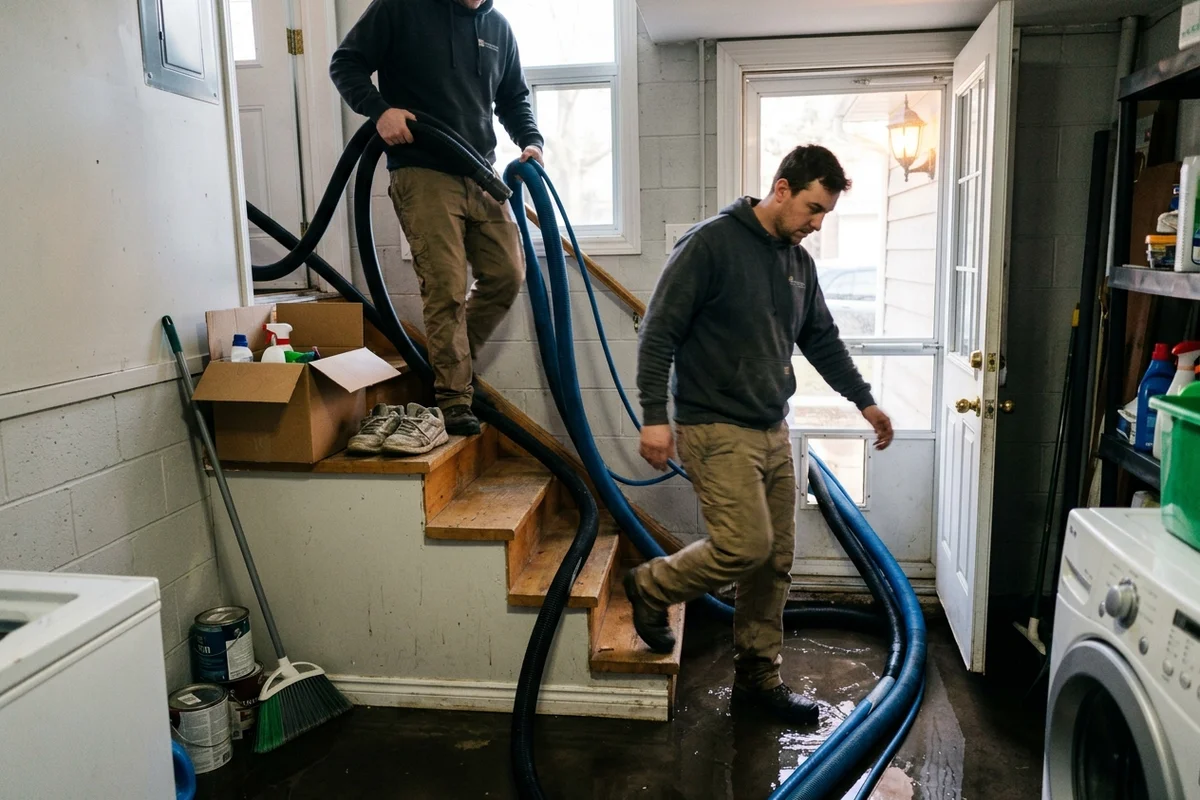
Three IICRC-certified technicians extracting water, logging moisture readings and setting air movers in a flooded finished basement
Published Range // Water Damage Restoration CAD

From

$250 CAD

per scope

Full bands
  • 18 Years of Basement Flood Response
  • IICRC WRT, ASD, AMRT, CDS Certified
  • 24/7 Dispatch, 90-Minute Response
  • Insurance Direct-Billing
  • 5-Star Customer Satisfaction
  • WSIB + $5M Pollution Liability

What Water Damage Restoration Covers in a Toronto Basement

Dealing with a basement flood is incredibly stressful, especially when you need the best water damage restoration Toronto has to offer. Most basement water claims actually involve two very distinct stages that insurers and contractors bill separately. We handle both the water mitigation stage, which includes extraction and drying, and the final rebuild stage.

Handling both sides means there is no frustrating hand-off gap between the drying crew and the restoration crew. That continuity matters a lot more than it might sound right now. Our professional service team prevents the common problems that happen during a contractor hand-off:

  • Open wall cavities sitting exposed for weeks.
  • Insurance adjusters sending questions to the wrong company.
  • Homeowners being forced to act as an unpaid project manager.

Keeping everything under one roof completely eliminates those headaches. The water source dictates the IICRC category, which then sets the specific tear-out needs and required personal protective equipment. Our technicians hold IICRC WRT certification and perform every single job to the strict IICRC S500 standard.

Following recognized industry standards ensures your property is treated safely and correctly.

A clear, written scope of work easily separates the insurance-covered repairs from any out-of-pocket items. The entire file is priced using an Xactimate estimate, a format your insurance adjuster already recognizes. We present the data this way so the line items can be compared directly against the insurer’s own pricing for a smoother approval process.
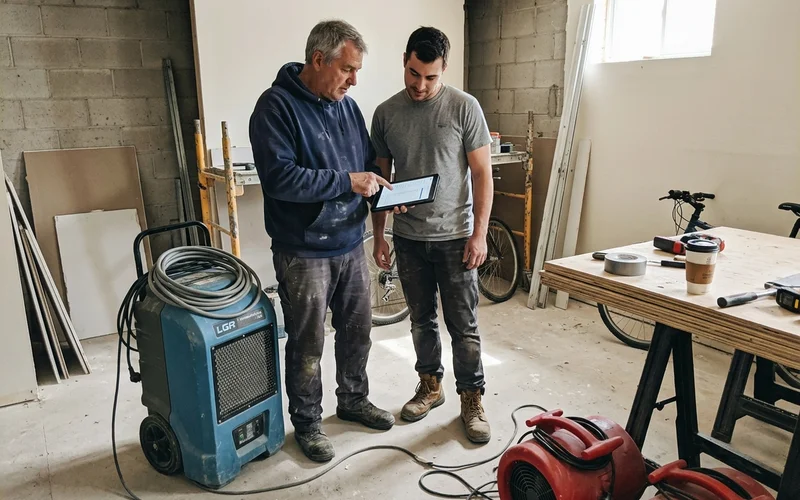
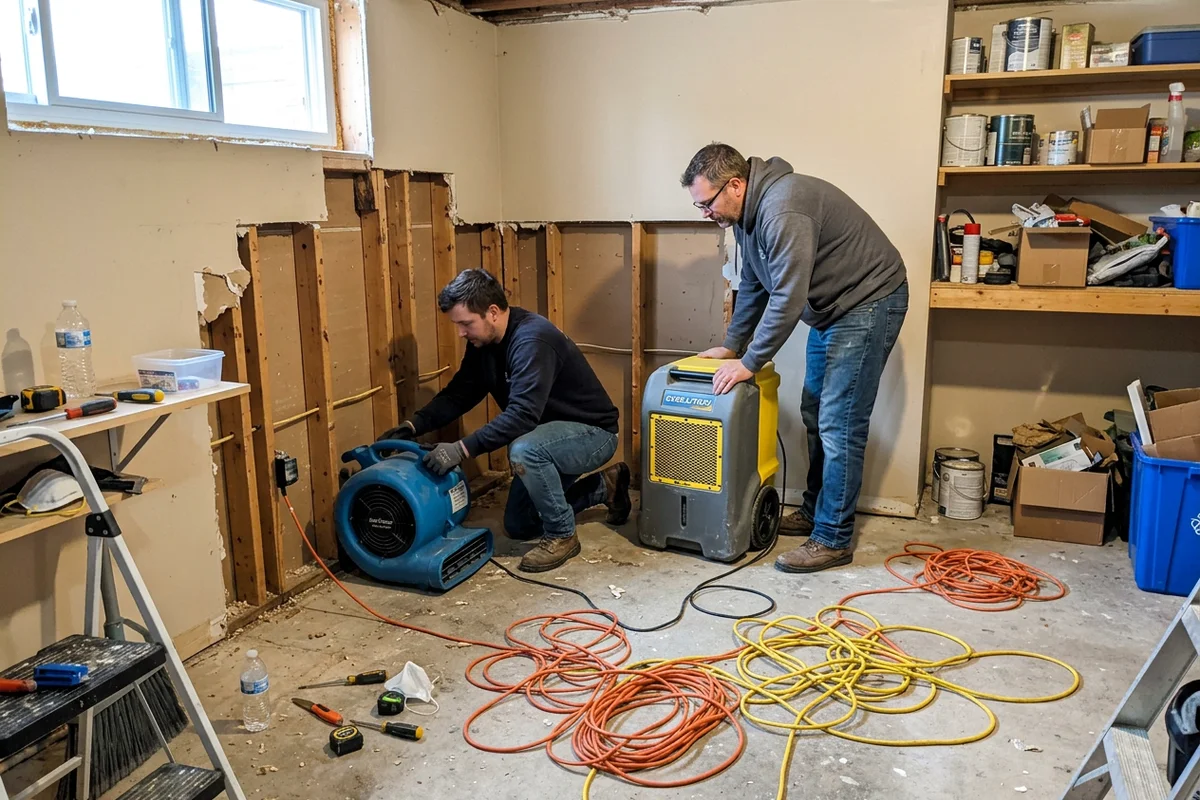
Two technicians reviewing a psychrometric drying log on a tablet beside a dehumidifier in a Toronto basement

The 5 Phases of Full Water Damage Restoration From Extraction to Rebuild

Getting your space back to normal requires a very specific sequence of events. Skipping steps can lead to hidden moisture issues later on. Our process follows a proven path to make sure your property is completely safe and fully restored.

  1. Emergency extraction. Truck-mounted units and submersible pumps remove standing water on the very first visit. Every single hour water sits, it wicks higher into the surrounding drywall, making this phase entirely about speed. We waive the dispatch fee when extraction happens on that same initial visit.
  2. Tear-out and contents triage. Wet materials that cannot be dried in place come out with a measured flood cut, usually 12 to 24 inches above the wet line. Contents are immediately photographed and sorted carefully into clean, restorable, and non-salvageable categories. Our team provides a full contents pack-out for larger jobs to protect everything that can be saved.
  3. Structural drying. LGR dehumidifiers and high-velocity air movers are sized precisely by psychrometric calculation. These low-grain refrigerant units pull deep moisture out of materials much faster than standard home dehumidifiers. We keep a detailed psychrometric drying log of relative humidity, grains per pound, and material moisture every single day until the framing, subfloor, and concrete meet the exact dry standard.
  4. Cleaning and antimicrobial application. Technicians HEPA-vacuum all exposed surfaces to capture tiny particulates before applying specialized treatments. For Category 2 and Category 3 losses, a thorough antimicrobial application on the framing and concrete is simply part of the necessary scope. We never treat this vital sanitation step as an optional add-on.
  5. Reconstruction. The rebuild crew reinstates the framing, insulation, drywall, paint, trim, and flooring perfectly like-for-like once the dry standard is officially signed off. This final phase focuses on matching the approved scope of loss completely so your home looks perfect again. Our goal is to make it look as though the flood never even happened.

How Category Changes the Job

The source of the leak determines exactly how the cleanup must be handled. Industry standards classify flood situations into three distinct categories based on contamination levels. We treat every single category with a specific, highly controlled protocol.

Understanding these differences helps explain why certain materials have to be removed immediately. A quick assessment determines the safest approach for your family. Our technicians always prioritize health and safety when evaluating these hazardous environments.

Water CategorySource ExamplesRequired Action
Category 1: Clean WaterClean supply line, broken water heaterExtraction and structural drying. Drywall and carpet can sometimes be saved.
Category 2: Grey WaterWashing machine overflow, sump pump failureRemoval of carpet pad and lower drywall. Antimicrobial treatment required.
Category 3: Black WaterSewage backup, outside floodwaterMandatory removal of all porous materials, strict PPE, full disinfection.

Category 1: Clean Water

This type of water comes directly from a clean source, such as a broken supply line or a leaking water heater. Drywall and even carpet can sometimes be dried entirely in place if the extraction happens fast enough. We use penetrating moisture meters to confirm if these materials are truly safe to keep.

Category 2: Grey Water

Grey water carries a noticeable level of contamination right from the start. This happens with a washing machine overflow, a sump pump failure pushing dirty groundwater in, or even clean water that has sat long enough to grow bacteria. Our protocol here usually requires removing the carpet pad and the lower sections of drywall.

Category 3: Black Water

Black water is highly hazardous sewage or contaminated floodwater rushing in from outside. Every single porous material this water touches must be completely removed for safety reasons. We make sure strict PPE and containment are mandatory on these sites, and thorough disinfection is fully part of the scope.

Please see our detailed sewage backup cleanup page for a full breakdown of that specific protocol. Ignoring these safety guidelines can lead to serious health risks for anyone living in the home. Our priority is to eliminate those risks entirely before the rebuild begins.

When You Need Full Restoration and When You Do Not

Not every single basement flood requires a massive construction project. A small clean-water leak caught within hours in an unfinished basement often needs only quick extraction and a few days of targeted drying. We will never quote you for a full rebuild crew if you simply do not need one.

Fast response times during the initial leak often eliminate the need for expensive structural repairs later.

Full restoration becomes absolutely necessary when a property falls into a few specific situations. Understanding these triggers helps you plan your next steps with the insurance company. Our project managers look for these exact criteria when assessing a new site:

  • Finished materials like drywall and flooring were already removed.
  • A Category 2 or 3 contamination forced a heavy, mandatory tear-out.
  • The loss touched a legal rental unit that needs to pass code inspections.

If you are only dealing with standing water right now, your best immediate move is to start with emergency water extraction. Fast action in those early hours prevents secondary damage from setting into the wood framing. We focus heavily on rapid response to keep your overall repair costs as low as possible.

Getting the right help at the right time is the easiest way to minimize disruption to your home.

Sometimes, a homeowner has already completed the mitigation phase with another service provider. If the structural drying is completely done and you just need walls and floors back, you can skip ahead. Our carpenters can step in and take you straight to basement reconstruction.

Why Homeowners Hesitate to Hire One Company for the Whole Restoration

Many property owners have concerns about handling a large insurance claim with a single contractor. The fear of inflated quotes or losing control of the project is completely understandable. We address these common hesitations directly so you can make an informed choice for your property.

“Won’t one company just inflate the whole job?”

The opposite scenario is actually much more common in this industry. Splitting jobs creates duplicate site visits, duplicate markups, and frustrating communication gaps. We use a detailed CAD scope to keep the entire process completely transparent by separating:

  • Emergency extraction hours.
  • Specific drying equipment usage.
  • Individual reconstruction materials.

This open format means you and your adjuster can easily challenge or review any single line item. Keeping the process clear protects you from surprise charges at the end of the project. Our pricing remains strictly tied to industry-standard Xactimate estimating software to ensure fairness.

“My insurer gave me a company to call.”

You can absolutely use their recommendation, but you also have the legal right to choose your own contractor in Ontario. The insurance company’s preferred vendor works directly for them, not for you. We are an independent team, which means our loyalty stays strictly with the property owner.

You always have the final say on which certified professionals handle your private property repairs.

Independent contractors like us still work actively with your adjuster to get the file approved. This arrangement gives you complete control over who is walking around inside your home. Our project managers communicate with the insurance desk every single day to keep the claim moving forward.

“I only want the drying done, I’ll rebuild myself.”

That is a perfectly fine approach for handy homeowners who want to keep their out-of-pocket costs down. Performing the rebuild yourself is a great way to handle minor basement finishes. We will gladly sign off on the dry standard, hand you the formal drying log and photos, and step away completely.

Just do not close up those walls before the moisture readings officially pass the standard. Trapped moisture behind fresh drywall is the single most common cause of dangerous mould growth. We receive calls about this exact mistake roughly six months after a flood because homeowners overlook these hidden damp spots:

  • Bottom plates inside wall cavities.
  • Concrete subfloors under laminate.
  • Insulation tucked behind vapor barriers.

Taking an extra day to verify these materials are truly ready saves massive future remediation costs. Checking the studs with a penetrating moisture meter is the best way to be absolutely sure. Our final readings provide that necessary peace of mind before you start putting up brand new drywall.

Finding a reliable team makes this stressful process much easier to handle. You deserve a safe, clean space restored to its original condition. We are always ready to provide the professional water damage restoration Toronto property owners rely on.
CAD Field Tariffs // Published Before You Call

Water Damage Restoration Cost in Toronto: What a Full Scope Adds Up To in CAD

A full restoration is the sum of its stages. We price each stage on its own line, so the mitigation total and the rebuild total are visible separately to you and to your adjuster.

Published Scope Bands

per scope
Emergency Dispatch Fee (waived on same-visit extraction) $250 - $500 CAD
Water Extraction (Cat 1 to Cat 2) $500 - $4,000 CAD
Structural Drying (3-5 days) $1,500 - $5,000 CAD
Sewage Backup Cleanup Cat 3 (if present) $2,000 - $10,000 CAD
Typical insurance-covered total scope $3,500 - $15,000 CAD

What Moves the Price

Cost Factors
  • Water category

    Category 1 clean water allows more drying in place. Category 3 sewage means porous materials come out, which raises both cleanup and rebuild cost.

  • Time before extraction

    Water left 24-48 hours wicks higher into drywall and can degrade from Category 1 to Category 2, widening the tear-out.

  • Finished area and materials

    Carpet, underpad, built-ins and hardwood add removal and reinstatement lines. Concrete and tile clean up for less.

  • Square footage affected

    Equipment count and extraction time scale with the wet area. Under 500 sqft stays in the lower bands.

  • Rebuild scope

    Like-for-like reinstatement follows the adjuster approval. Upgrades are quoted separately and are out of pocket.

Every quote itemises emergency fee, extraction, drying, cleanup, and permanent solution separately. Dispatch fee waived on same-visit extraction. Insurance direct-billing available on covered claims, subject to policy limits and adjuster approval.

Incident Timeline // Protocol Sequence

How IICRC S500 Water Categories Decide Your Restoration Scope

The water source sets the category, the category sets the tear-out and PPE, and the tear-out sets the rebuild. This is the sequence we follow on every file.

  1. STEP 01

    Identify the source and stop it

    Supply line, water heater, sump failure, groundwater or sewer. The source is isolated first, and it decides the starting IICRC category.

  2. STEP 02

    Assign the category

    Category 1 clean, Category 2 grey or Category 3 black. Time matters: clean water left sitting can degrade to Category 2 within about 48 hours.

  3. STEP 03

    Set the tear-out and PPE

    Category 1 often allows drying in place. Category 2 usually means pad and lower drywall come out. Category 3 means every porous material that touched the water is removed with full PPE.

  4. STEP 04

    Extract, dry and document

    Truck-mount extraction, then LGR dehumidifiers and air movers sized by psychrometric calculation, with a daily moisture log until the dry standard is met.

  5. STEP 05

    Clean and treat

    Antimicrobial application on affected framing and concrete, HEPA vacuuming, and disinfection where the category requires it.

  6. STEP 06

    Rebuild to the approved scope

    Framing, insulation, drywall and flooring reinstated like-for-like once the dry standard is signed off, with upgrades quoted separately.

Typical timeline: mitigation 3-5 days, rebuild 2-5 weeks depending on scope and approvals

Risk Reversal // Before Any Equipment Goes Down IN WRITING

Water Damage Restoration: Price Confirmed Before We Start, Warranty After We Finish

This job is priced inside the published CAD bands above, itemised before equipment goes down, and closes with a written workmanship warranty. Insurance-covered claims are billed directly to your insurer, subject to policy limits and adjuster approval.

Field Terminal // Self-Serve Estimator FREE

Try Our Free Basement Flood Cleanup Cost Estimator

Estimate a CAD range for extraction, cleanup and drying based on water category, affected area and drying days.

Open Calculator
Technical Specifications // Protocol Integrity

6 Reasons Toronto Homeowners Keep One Crew for the Whole Restoration

18 YRS

18 Years of Basement Flood Response Experience

Eighteen years of GTA flood files means we know what adjusters ask for at each stage and what gets missed between contractors.

NO HAND-OFF GAP

One File, One Crew

The technicians who took the first readings are the ones who sign off the dry standard and hand over to the rebuild lead.

IICRC S500

IICRC WRT Certified

Water Damage Restoration Technician certification on every field lead, working to the IICRC S500 standard.

LINE ITEMS

Mitigation and Rebuild Itemised

Your scope separates mitigation from restoration and covered items from out-of-pocket upgrades.

DIRECT BILL

Direct Billing

We bill directly to Aviva, Intact, Definity, Wawanesa, Economical, TD, Belair, subject to your policy limits and adjuster approval.

DAILY READINGS

Daily Moisture Log

Readings are logged and shared every day so you and your adjuster can see drying progress, not just hear about it.

Verified Case Dossiers // GTA Residences

3 Full Restorations, From Wet Carpet to Finished Rebuild

Omar F. Mimico
"Burst supply line flooded the whole lower level. One team handled extraction, drying and the rebuild. Aviva covered the $12,700 scope after the S500 package and we were back downstairs in five weeks."
Laura G. Leslieville
"They separated mitigation and rebuild on the estimate so our adjuster could approve each stage. Mitigation came to $4,100, all itemised."
Kevin P. Don Mills
"Daily moisture readings were texted to us every morning. Drying took four days, the whole restoration came in at $8,900 and Definity approved it without a second inspection."
FAQ Archive // Operational Guidelines

10 Water Damage Restoration Questions We Answer Every Week

What is the difference between water mitigation and restoration?

Mitigation is everything that stops the damage from getting worse: extraction, removing wet materials that cannot be saved, structural drying, antimicrobial treatment and the documentation that proves the building is dry. Restoration is putting the basement back: framing repairs, insulation, drywall, paint, flooring and trim. Insurers usually approve and pay them as two stages, often with a different adjuster review for each. That is why our scope lists them separately. It lets your adjuster approve mitigation on day two, before anyone knows exactly what the rebuild will need, and it keeps drying moving instead of waiting on a single all-in number. It also means you can see exactly what you are paying for at each point.

How long does water damage restoration take?

Mitigation usually runs 3 to 5 days: extraction on day one, then a drying cycle with daily readings until the materials hit the dry standard. The rebuild takes 2 to 5 weeks depending on how much was removed, whether permits are needed, and how quickly the adjuster approves the restoration scope. A small Category 1 leak in an unfinished basement can be fully done in a week. A Category 3 sewage backup through a finished basement with a rental unit can take six weeks from the first call to the tenant moving back in. We give you a written schedule on the scope and update it if the readings or approvals change the timeline.

Will my insurance pay for the whole restoration?

Only your policy and your adjuster can answer that, and we never promise coverage. In general, sudden and accidental water damage such as a burst pipe is covered under most Ontario home policies, sewer backup needs its own endorsement, and gradual seepage is usually excluded. Your deductible applies, and sub-limits on sewer backup or overland water can cap what the insurer pays. What we do is document the loss under IICRC S500 from the first hour, separate covered and uncovered items on the scope, and bill directly to Aviva, Intact, Definity, Wawanesa, Economical, TD and Belair, subject to your policy limits and adjuster approval. If part of the work is not covered, you see that line before it is done.

Can I choose my own restoration company in Ontario?

Yes. Your insurer may suggest a company from its network, but in Ontario the choice of contractor is yours. We are not a preferred vendor for any insurer. We work with the adjuster on documentation and pricing so the file moves either way, and we bill the insurer directly on the approved scope.

Do you handle the rebuild after drying?

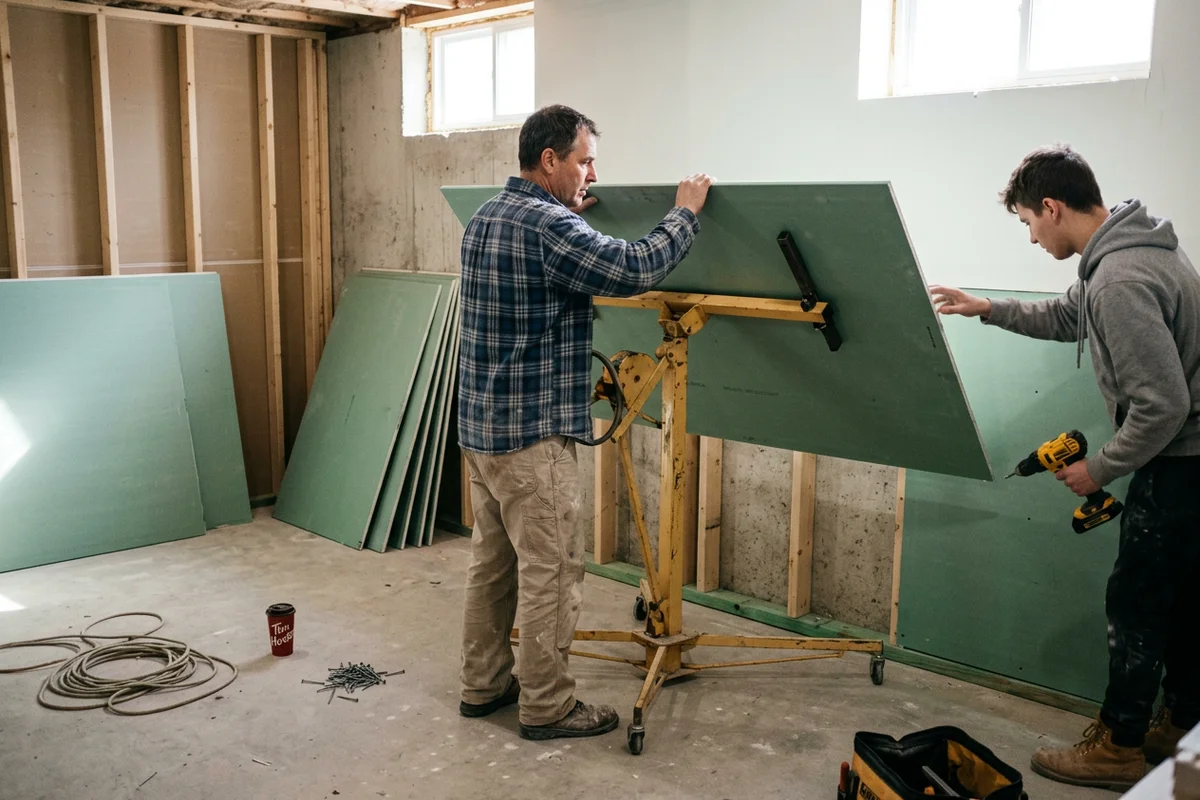
Yes. Our basement reconstruction crew picks up the file after the dry standard is signed off. There is no gap between drying and rebuilding while you look for another contractor, and the rebuild lead already has the photos, readings and tear-out record from mitigation.

What does a full water damage restoration cost in Toronto?

Most insurance-covered scopes we complete land between $3,500 and $15,000 CAD for mitigation and cleanup. That breaks down as a $250-$500 dispatch fee (waived on same-visit extraction), $500-$4,000 for extraction, $1,500-$5,000 for structural drying, and $2,000-$10,000 if sewage is involved. Rebuild costs are separate and depend on the finishes being reinstated.

Is burst pipe damage handled differently from groundwater flooding?

Yes. A burst supply line is usually Category 1 clean water and a sudden event, so drying in place is often possible and most policies cover it. Groundwater through the foundation is usually Category 2, and seepage may not be covered. The category and the source change the tear-out, the equipment and the insurance conversation.

Should I start cleaning up before you arrive?

Only if it is safe. Photograph everything first, stop the water source if you can, and move valuables upstairs. Do not stand in water near outlets, and do not handle sewage. Avoid pulling up carpet or drywall yourself, because the adjuster may want to see it in place and in our photo log.

Do you work with my adjuster directly?

Yes. We send the IICRC S500 documentation package by day two, meet adjusters on site when they request it, and answer scope questions directly so you are not relaying messages between two parties.

Do you serve Mimico, Leslieville and Don Mills?

Yes, all three sit well inside our 90-minute dispatch window, along with the rest of Toronto, Etobicoke, North York, Scarborough, Vaughan and Mississauga.

Question not covered here? Call (416) 555-0100 Send a Message

Dispatch desk open 24/7 across the GTA

One Crew From the First Reading to the Last Baseboard.

Call once and the same team extracts, dries, documents and rebuilds, with mitigation and restoration priced on separate lines your adjuster can approve.

  • Emergency fee quoted upfront
  • Written CAD scope first
  • 1-5 year written warranty

Short Dispatch Intake

DISPATCH ACTIVE

Four fields and the dispatch desk calls you back. Your page is attached so we know which service you were reading about.

Need something non-urgent? Send a Message to our GTA coordination desk.

Call (416) 555-0100 CAD Scope Intake