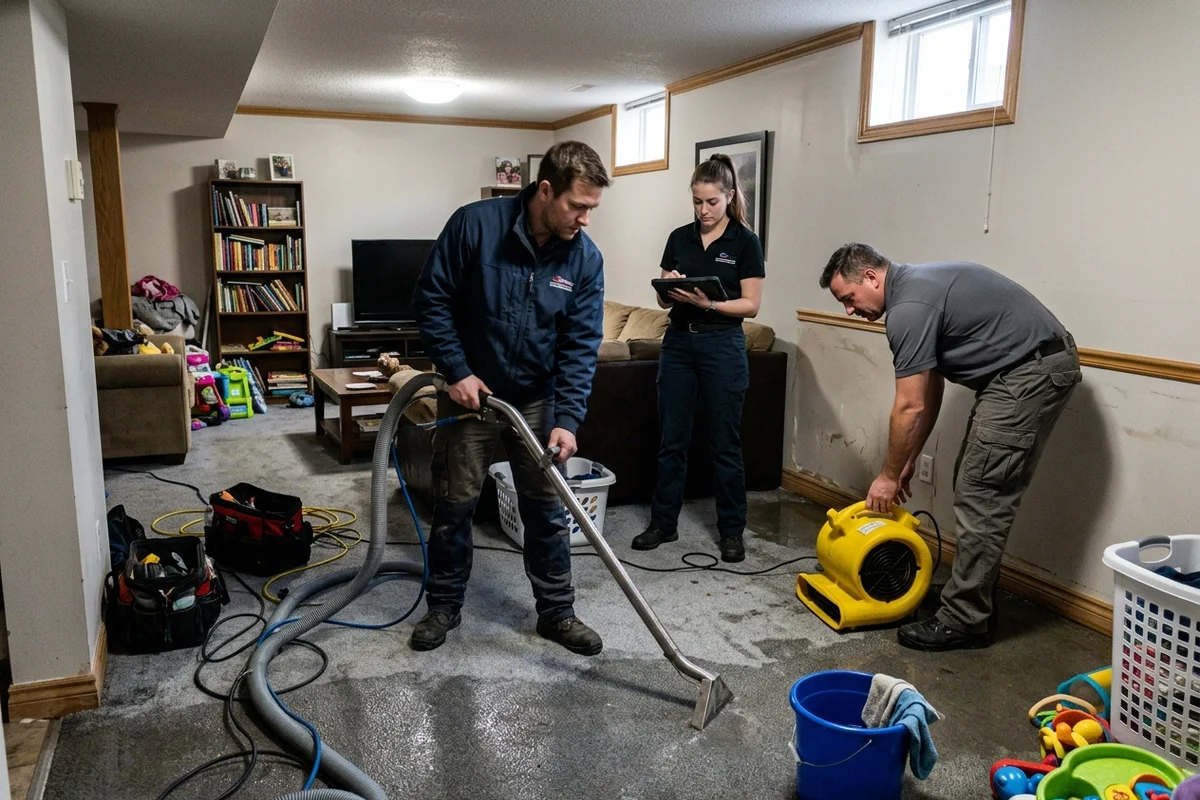
Emergency Operations: 24/7 GTA Dispatch
(416) 555-0100

AMRT Certified // Containment Before Removal

Basement Flood Toronto: Mould Remediation Toronto, AMRT-Certified Containment, Removal and Air Quality Verification After a Flood

By The Basement Flood Toronto Crew

Mould remediation in Toronto is AMRT-certified removal of mould growth after a basement flood or leak under IICRC S520 containment, priced by area from $1,500-$3,500 CAD for under 100 sqft to $8,000-$15,000 CAD for a whole basement, with post-remediation air quality verification from $400-$900 CAD.

Mould is a moisture problem that shows up as a surface problem. We contain it before anything is disturbed, remove what cannot be cleaned, fix the water that caused it, and prove the result with an air test rather than a promise.

  • 18 Years GTA Basement Flood Response
  • IICRC WRT, ASD, AMRT, CDS Certified
  • 24/7 Dispatch, 90-Minute Response
  • Insurance Direct-Billing, Subject to Policy Limits
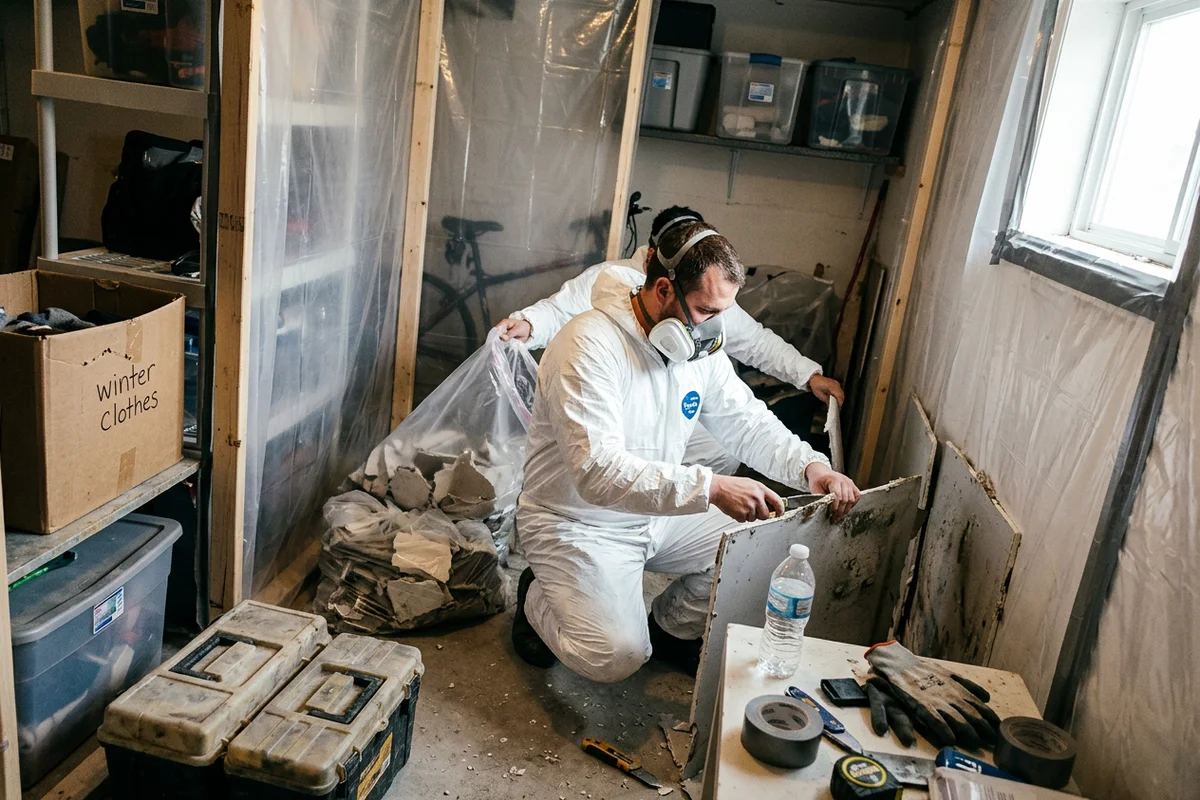
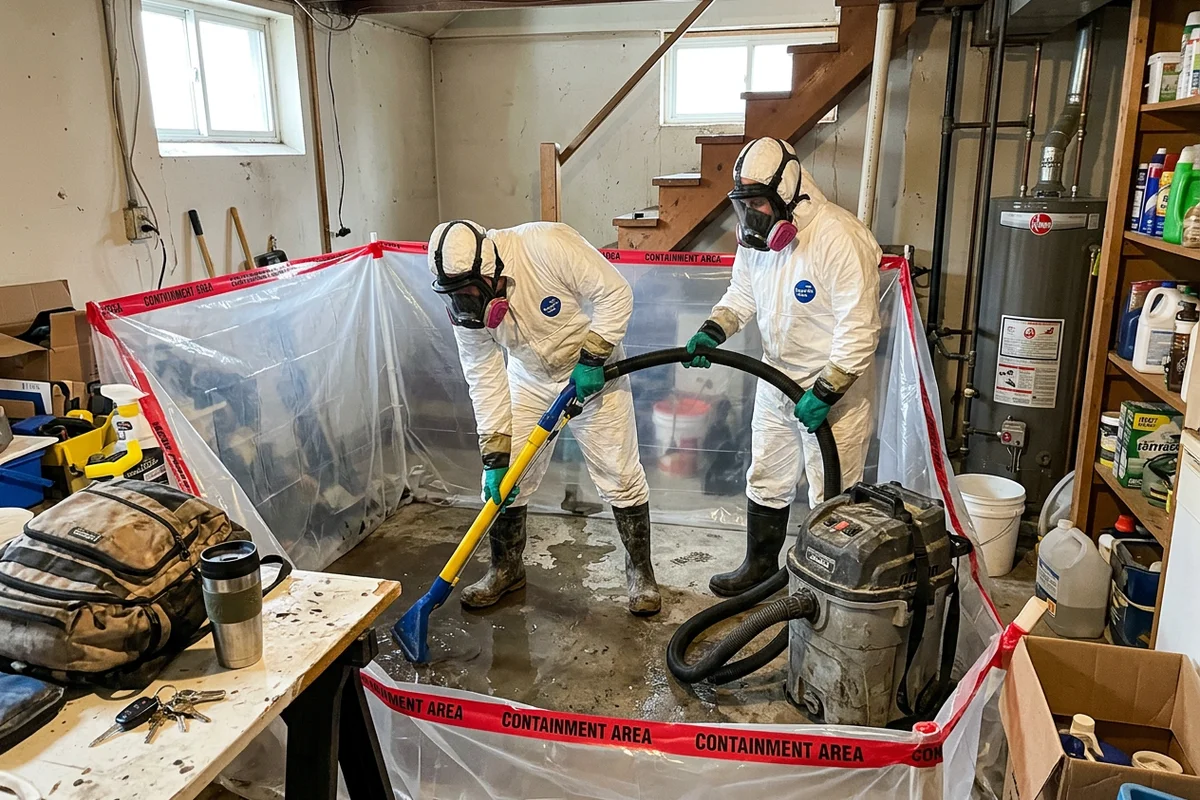
Two AMRT technicians in respirators inside poly containment removing mould-damaged drywall in a basement
Published Range // Mould Remediation CAD

From

$400 CAD

by affected area

Full bands
  • 18 Years of Basement Flood Response
  • IICRC WRT, ASD, AMRT, CDS Certified
  • 24/7 Dispatch, 90-Minute Response
  • Insurance Direct-Billing
  • 5-Star Customer Satisfaction
  • WSIB + $5M Pollution Liability

What Mould Remediation Involves After a Toronto Basement Flood

Have you recently found water pooling downstairs and started worrying about what happens next? We completely understand the stress of dealing with sudden property damage.

Fast mould remediation Toronto homeowners can count on is essential, since growth usually starts within 48 to 72 hours of a basement flood in Toronto. Our professional process stops this problem right in its tracks.

Before any drywall comes off, the first step is building proper containment using 6-mil poly sheeting and negative air pressure. We then carefully remove the affected porous materials, HEPA-vacuum the space, and treat all the surfaces.

Fixing the original moisture source guarantees the issue does not return. We verify the final air quality by comparing indoor spore counts to a clean outdoor baseline.

This approach returns your home to a normal fungal ecology, which simply means the indoor levels match the natural outdoors. Our dedicated technicians hold AMRT (Applied Microbial Remediation Technician) certification.

This rigorous training ensures the work follows IICRC S520, the strict standard for professional mould remediation. We follow a simple but powerful rule from that specific document.

Dead spores are not just treated and left behind in the wall cavity. Our team physically removes the growth completely to keep your indoor air fresh.
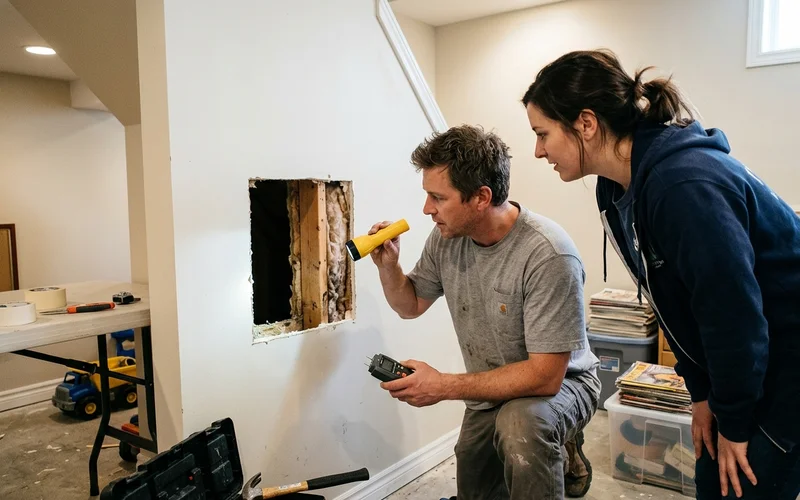
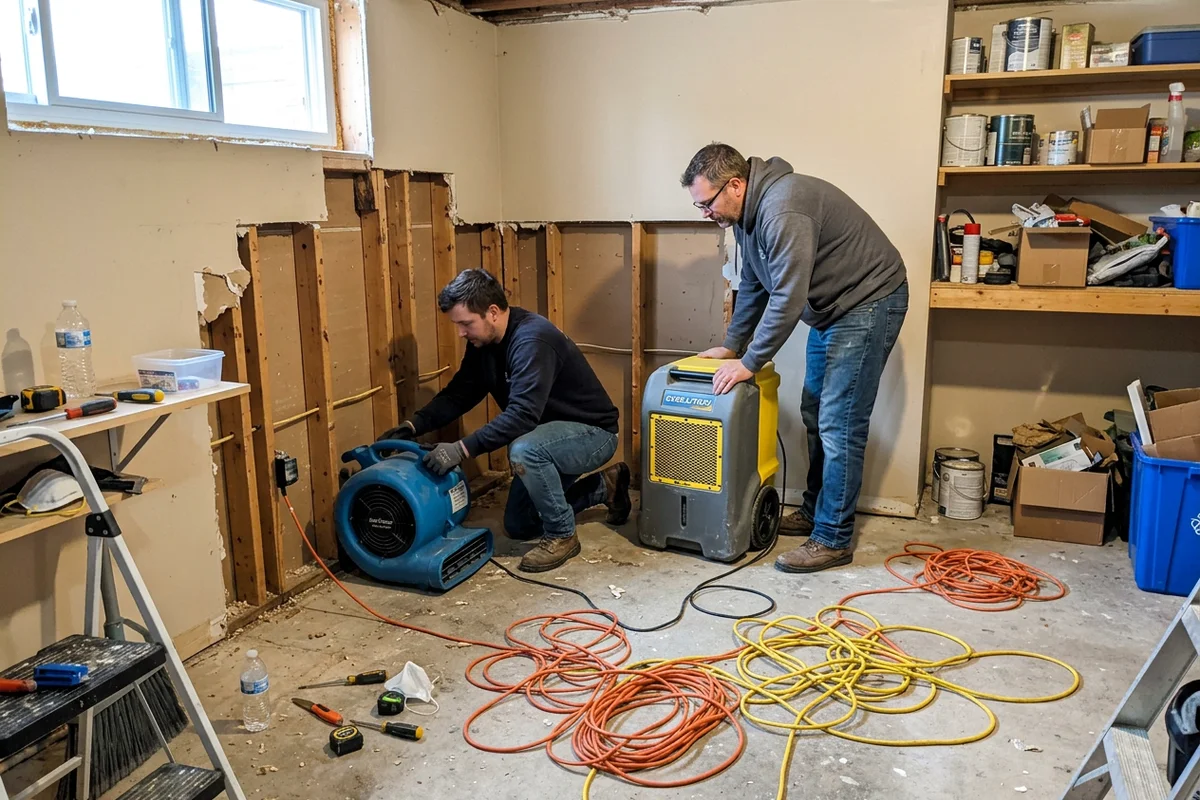
Two technicians inspecting hidden mould inside a basement wall cavity through a small inspection opening with a flashlight

AMRT Containment: 6 Steps We Take Before Removing a Single Piece of Drywall

Setting up the workspace safely requires a strict, methodical approach. Our containment strategy uses six critical steps to protect the rest of your building.

  1. Isolate the HVAC. Supply and return vents in the work area are sealed off tightly. We do this so the furnace does not carry spores through the house.
  2. Build 6-mil poly containment. Thick plastic walls and ceilings enclose the work area from floor to ceiling, with seams carefully taped using heavy-duty tuck tape. Our technicians ensure this barrier is completely airtight.
  3. Install a heavy-duty zipper door. A sealed entry controls access perfectly. We require this so the barrier stays closed during the actual work.
  4. Set negative air pressure. A specialized negative air machine with DOP-tested HEPA filtration exhausts air outside. We create this pressure difference so air flows into the containment area and never out of it.
  5. Start HEPA air scrubbing. A high-efficiency scrubber runs constantly inside the enclosure. Our equipment captures any airborne spores released during the removal process.
  6. Protect the path out. Floors between the work zone and the exit are covered securely. We carry the debris out in sealed bags along this protected route.

Field note: If a quote does not mention containment and negative air, ask the contractor why. We know that on anything bigger than a small patch, removal without these safeguards can easily spread the problem upstairs to your living spaces.

Common Basement Moulds in Toronto

Knowing what you are looking at helps you understand the required response. We frequently encounter three main types of fungal growth in local basements.

Colour does not identify a specific species, so professional testing is always more reliable than guessing. Our crews handle every significant growth using the exact same strict containment protocol, regardless of the type.

The table below outlines these common intruders clearly.

Mould TypeCommon CharacteristicsTypical Hiding Spots
CladosporiumOften appears as dark spots on damp surfaces.Frequently found on wet windowsills and damp fiberglass insulation.
AspergillusGrows rapidly on a wide range of damp materials.Commonly discovered in household dust and thick wall insulation.
Stachybotrys chartarumKnown as the dreaded “black mould” that needs prolonged wetness.Grows on cellulose materials like drywall paper, typically after improperly dried floods.

We always aim to safely remove the hazard and prevent it from returning. Finding any of these varieties means you need expert help right away.

How Verification Works

This testing happens only when the removal and cleaning phases are complete and the area is totally dry. We take air samples inside the work area and compare them to an outdoor baseline sample.

The independent lab then analyzes the air to compare the spore count and the specific types present. Our internal standard requires indoor results to be similar to or lower than the outdoors, without any unusual concentration of a single type.

The official verification report is yours to keep for insurance purposes or a future home resale. We take down the plastic containment only after seeing these passing numbers.

The Final Inspection Process

A final thorough HEPA vacuum and a detailed visual inspection complete the job in specific surface-level cases. We sometimes find that visible growth is limited entirely to hard surfaces rather than porous walls.

Using a specialized Air-O-Cell cassette during sampling ensures the lab gets the most accurate reading possible. We take pride in leaving your space clean, safe, and ready for regular use.

When It Is Not Just Mould

Fungal growth is always a symptom of a much larger moisture problem. We regularly see complex situations where multiple solutions are necessary.

Fixing the source often involves three distinct, related services. Our team provides straightforward quotes for each specific need to fix the root cause.

Finding the right fix means looking at the whole picture. We adapt our methods to the exact type of water damage your property experienced.

  • Water Damage Recovery: Dealing with the aftermath of a flood might require structural drying to bring the wood framing to the dry standard.
  • Contamination Cleanup: We handle sewage backup cleanup directly prior to remediation to remove harmful biohazards.
  • Moisture Prevention: Professional basement waterproofing stops the leak from returning if the source is foundation seepage.

We quote those related projects separately so you see exactly what each part costs.

Why Homeowners Fear the Price of Mould Removal, and What It Really Costs

Cost is usually the biggest concern for property owners facing a remediation project. We want to clear up the confusion around these expenses with complete transparency.

“I’m scared it will cost tens of thousands.”

Fear of the final number is exactly what lets small fungal problems become massive ones. In our professional opinion, acting early saves you a tremendous amount of money.

Most jobs actually fall into the small or medium category. We price small areas transparently at $1,500 to $3,500 CAD.

Medium areas generally range from $3,500 to $8,000 CAD. We see whole basements cost between $8,000 and $15,000 CAD, usually after a flood that was never properly dried.

These published, ungated rates ensure you are never caught off guard.

“Companies find mould everywhere once they start looking.”

We show you the exact moisture readings and open small inspection holes before attempting any wider removal. This careful approach protects your existing walls from unnecessary demolition.

If hidden growth widens the scope of the project, we ensure you see exactly why before proceeding. A visual confirmation builds confidence in the entire process.

“I tried bleach and it came back.”

We hear this comment all the time from frustrated homeowners. That temporary fading effect is simply what bleach does on porous drywall.

Our technicians know that bleach only lightens the surface while leaving the active growth alive inside the material. Physical removal is the only true fix for porous materials acting like a sponge.

“Can’t I just paint over it?”

We strongly advise against this popular DIY shortcut. Spreading mould-resistant paint right over live mould simply traps the problem inside the wall.

Our experience shows that the fungus will eventually eat right through that fresh coat of paint. The paint layer also makes it much harder to see exactly how far the damage has spread.

We remove the contaminated materials completely, so contact us today to get your basement inspected and schedule the most reliable mould remediation Toronto has to offer.
CAD Field Tariffs // Published Before You Call

Mould Remediation Cost in Toronto by Area, in CAD

Mould is priced by the affected area and the level of containment it needs. These are the published bands, and the scope lists containment, removal, cleaning and verification as separate lines.

Published Scope Bands

by affected area
Small Area (under 100 sqft) $1,500 - $3,500 CAD
Medium Area (100-500 sqft, containment) $3,500 - $8,000 CAD
Whole-Basement (500+ sqft, containment + air scrubbers) $8,000 - $15,000 CAD
Post-Remediation Air Quality Verification $400 - $900 CAD

What Moves the Price

Cost Factors
  • Affected area

    Under 100 sqft is a small job. 100-500 sqft needs full containment. Over 500 sqft adds air scrubbers and more removal.

  • What is growing on

    Drywall and insulation are removed. Framing and concrete are cleaned in place. Carpet and pad almost always go.

  • Hidden growth

    Growth inside wall cavities is found by opening inspection holes, and can widen the scope once visible.

  • Moisture source

    A leak, seepage or humidity problem must be fixed or remediation will not last. That work is quoted separately.

  • Verification

    Post-remediation air quality verification is $400-$900 CAD and compares indoor results with an outdoor baseline.

Every quote itemises emergency fee, extraction, drying, cleanup, and permanent solution separately. Dispatch fee waived on same-visit extraction. Insurance direct-billing available on covered claims, subject to policy limits and adjuster approval.

Incident Timeline // Protocol Sequence

How Mould Remediation Works: Contain, Remove, Clean, Dry, Verify

Five stages, in this order. Skipping containment spreads spores through the house. Skipping drying brings the mould back.

  1. STEP 01

    Contain

    6-mil poly sheeting seals the work area, a zipper door controls access, and a negative air machine keeps air flowing into the containment, not out of it.

  2. STEP 02

    Remove

    Mould-damaged drywall, insulation, carpet and other porous materials are cut out, bagged inside containment and removed.

  3. STEP 03

    Clean

    Framing, concrete and remaining surfaces are HEPA-vacuumed, scrubbed and treated. HEPA air scrubbers run throughout.

  4. STEP 04

    Dry and correct the source

    The area is dried to the dry standard and the moisture source is addressed so growth does not return.

  5. STEP 05

    Verify

    Post-remediation verification compares indoor air with an outdoor baseline sample. Containment comes down only after it passes.

Typical timeline: small areas 1 day, medium 2-3 days, whole basement 4-6 days

Risk Reversal // Before Any Equipment Goes Down IN WRITING

Mould Remediation: Price Confirmed Before We Start, Warranty After We Finish

This job is priced inside the published CAD bands above, itemised before equipment goes down, and closes with a written workmanship warranty. Insurance-covered claims are billed directly to your insurer, subject to policy limits and adjuster approval.

Technical Specifications // Protocol Integrity

6 Reasons Toronto Families Trust Us With Basement Mould

18 YRS

18 Years of Basement Flood Response Experience

Most basement mould starts with a flood or leak. We have handled the water side for 18 years, so we fix the cause as well as the growth.

AMRT

AMRT Certified

Applied Microbial Remediation Technician certification, working in line with the IICRC S520 standard.

NEGATIVE AIR

Containment Before Removal

Poly containment and negative air go up before a single panel comes off. Spores stay in the work area.

CAD PUBLISHED

Published Area Pricing

Small $1,500-$3,500, medium $3,500-$8,000, whole basement $8,000-$15,000 CAD. No price gating.

VERIFIED

Air Test to Finish

Post-remediation verification against an outdoor baseline, so the result is measured, not assumed.

ROOT CAUSE

Moisture Source Fixed

Leaks, seepage and humidity problems are corrected so the mould has no reason to come back.

Verified Case Dossiers // GTA Residences

3 Toronto Basements Cleared of Mould, With the Numbers

Tanya R. Parkdale
"Musty smell weeks after a small leak. Containment went up before a single panel came off. Medium-area remediation was $4,700 and the air test passed."
Irene C. Lawrence Park
"Whole-basement remediation with HEPA air scrubbers after a sewage flood. $11,200, and the post-remediation verification was $600 on top, all quoted upfront."
Derek N. Humber Summit
"Small patch behind the laundry sink, under 60 sqft. $1,900 with containment, done in a day. They explained why the bleach I tried did not work."
FAQ Archive // Operational Guidelines

10 Mould Questions Toronto Homeowners Ask After a Flood

How do I know if I have mould after a flood?

The common signs are visible growth on drywall, baseboards or insulation, often grey, green or black spots, appearing 48 to 72 hours after water exposure; a musty smell that stays even after the basement seems dry; and elevated moisture readings on baseboards or the bottom of walls two weeks after extraction. Staining that spreads, paint that bubbles, and allergy-type symptoms that ease when you leave the house are other clues. Mould often grows first inside wall cavities and under carpet where you cannot see it. Moisture readings and a small inspection opening usually confirm it, and post-flood air quality verification ($400-$900 CAD) compares indoor spore counts with an outdoor baseline to settle it either way.

How much does mould remediation cost in Toronto?

Small areas under 100 sqft run $1,500-$3,500 CAD. Medium areas of 100-500 sqft with full containment run $3,500-$8,000 CAD. Whole-basement remediation over 500 sqft, with containment and HEPA air scrubbers, runs $8,000-$15,000 CAD. Post-remediation air quality verification is $400-$900 CAD. Where a job lands inside a band depends on what the mould is growing on, how much is hidden in wall cavities, and whether the moisture source needs repair. Every line is itemised before work starts.

Can I remove basement mould myself?

For a very small surface patch on a hard, non-porous surface, under about the size of a doormat, careful cleaning with gloves, a respirator and good ventilation is reasonable. For anything larger, anything on drywall or insulation, or anything that followed a flood, professional containment matters. Disturbing mould without containment and negative air sends spores through the house, and cleaning the surface of drywall leaves growth inside it. You also still need to find and fix the moisture source.

Is black mould dangerous?

Stachybotrys chartarum, often called black mould, grows on wet cellulose such as drywall paper after prolonged water damage. Health effects vary from person to person, and colour alone does not identify a species. Common basement moulds like Aspergillus and Cladosporium can also trigger allergy and asthma symptoms. Any significant growth indoors should be removed properly, whatever its colour, and anyone with respiratory conditions should stay out of the area.

Does bleach kill mould on drywall?

Not in a way that solves the problem. Bleach can lighten mould on the surface, but it does not penetrate porous drywall, and the water in it can feed the growth inside. On porous materials, removal is the fix. On hard surfaces, HEPA vacuuming and proper cleaning agents work better than bleach.

Do I need an air quality test after remediation?

We recommend it for medium and whole-basement jobs, for homes with vulnerable occupants, and whenever you want documented proof for a buyer or insurer. The test compares indoor spore counts with an outdoor baseline sample. Containment comes down only after the result is acceptable.

Will insurance cover mould removal?

Mould that results directly from a covered sudden water loss is sometimes covered, often with a sub-limit. Mould from long-term leaks, seepage or humidity is usually excluded. We document the cause and separate items so your adjuster can decide, subject to your policy limits and adjuster approval.

Can we stay home during mould remediation?

Usually yes, because containment and negative air keep the work area sealed from the rest of the house. For whole-basement jobs or households with infants, older adults or respiratory conditions, we may suggest staying elsewhere for the removal days.

How do you stop mould coming back?

By fixing the water. That can mean waterproofing, a crack repair, a sump pump, better drainage or controlling basement humidity below about 50 percent. Mould remediation without moisture correction is temporary.

Do you remediate mould in Parkdale, Lawrence Park and Humber Summit?

Yes. We remediate mould across Toronto, Etobicoke, North York, Scarborough, Vaughan and Mississauga, including older homes in Parkdale and Lawrence Park and post-war houses in Humber Summit.

Question not covered here? Call (416) 555-0100 Send a Message

Dispatch desk open 24/7 across the GTA

Musty Basement? Find Out What Is Behind the Wall.

A technician takes readings, checks for hidden growth and gives you a price by area, with containment and air verification listed line by line.

  • Emergency fee quoted upfront
  • Written CAD scope first
  • 1-5 year written warranty

Short Dispatch Intake

DISPATCH ACTIVE

Four fields and the dispatch desk calls you back. Your page is attached so we know which service you were reading about.

Need something non-urgent? Send a Message to our GTA coordination desk.

Call (416) 555-0100 CAD Scope Intake